The book “Petit Pays” by Gaël Faye was my (proper) introduction to Rwanda two years ago when I had to read it for my Contemporary African History class. Although the book speaks about the Genocide from the Burundian side, it is impossible to detach it from its Northern neighbor, which suffered the worst part of the massacres. At the time of the story told by Gaël Faye, Rwanda was one of the poorest countries in Africa, even poorer than Burundi, which now sits at the very bottom of the world poverty ranking.
About 800,000 people slaughtered and 30 years after, the Internet is now full of references calling Rwanda the “Singapore of Africa”. Sick and tired of this new motto, I decided to go check the country by myself.
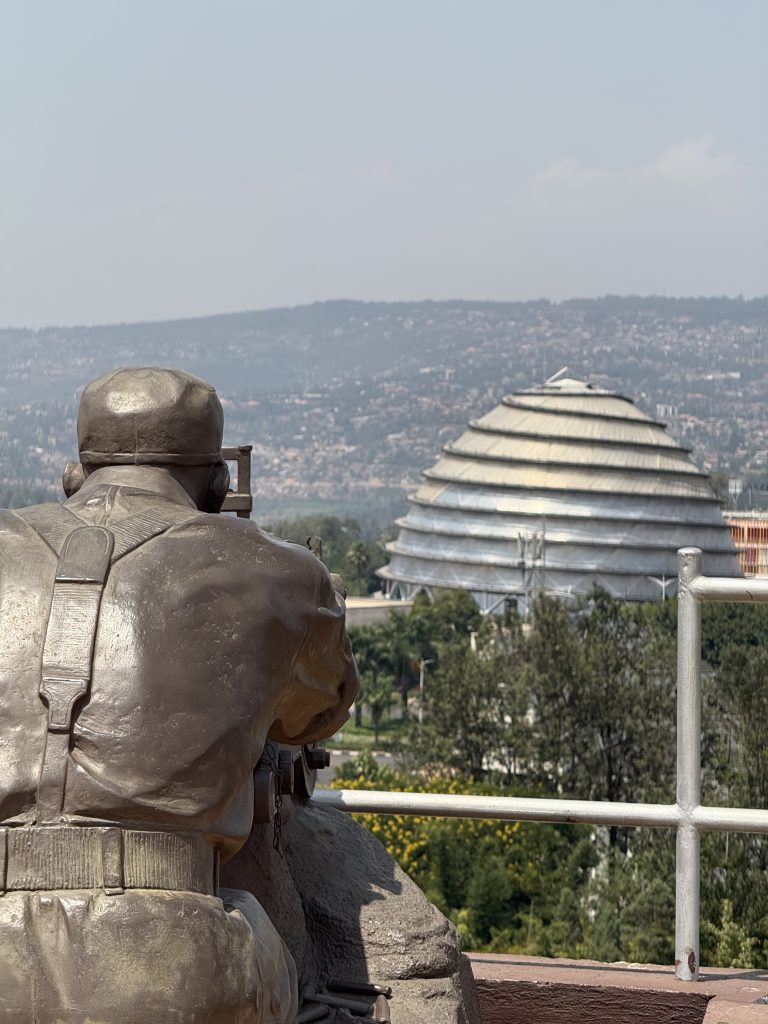
I refused to believe that a country that experienced the most horrible side of the human experience can recover so quickly, leaving the horrors of the past aside to build a new, improved society three decades later — and I was right.
If you want to know more about the Genocide, go do your own research. There are very good documentaries out there that will help you understand what happened in 1994. In case you are too lazy, let me summarize it to you. In Rwanda there are two main ethnic groups: Tutsis and Hutus. The Hutu make up the majority of the population. Although they share almost the same cultural traits between them, coexistence hasn’t been great since colonial times. In 1994, amid rising tensions, the plane of the (Hutu) President was shot down, and some radical Hutus blamed it on the Tutsis. For the next three months, the Hutu military, and radicalized civilians pursued the slaughter, rape, torture and humiliation of about 800,000 Tutsi, almost erasing them as an ethnic group.
The events of the genocide were so brutal that my chest shrinks just thinking about them. The massacres ended when Paul Kagame, current President, led the FPR to liberate the country from the genocide perpetrators. After the catastrophe, Rwanda had a lot of work to do. Not only did they have to rebuild the country, but also its society. Surprisingly for the international community, Rwanda experienced a massive transformation thanks to the aid for development from the pity of Western countries. The nation made the right investments and rose from the ashes, becoming a trusted international partner for Europe and the US and developing its territory like no other country in Africa has.
Nowadays, Rwanda is a clean, safe country where one can walk at night without safety concerns. Although still (per capita) quite poor compared to the world average, the progress of the country compared to 1994 speaks for itself. I was amazed by the effectiveness of their customs, the lengthy, pristine roads, the modern investments in Kimihurura, their smart and sustainable regulations such as mandating all new motorbikes to be 100% electric and much more. But for some reason, I could not deny there was something wrong, bizarre about Rwanda. A feeling so decrepit that continuously disturbed me and gave me a hard time at night. It felt like everything about the country was a theatre play, a massive set up to disguise the awful reality of a horrendous recent past. It felt as if everyone in Rwanda was trying to fight against the weight of history by burying it under tons of new roads and modern buildings.
Speaking of ethnicity in Rwanda is a taboo. No one, except from the museum guides at the many museums of Kigali speaks about “tutsi of hutu”. It has been erased from the daily vocabulary of the Rwandans, because now they are just that: Rwandans. The government has made a great effort to eliminate any sort of ethnic distinction in order to push the country forward. By forgetting who they are, or who they were, the government believes Rwandans will move on, forgive and heal. Wrong.
From my interactions in Rwanda and my observations, it is clear that ethnicity still matters. Groups of friends are hardly mixed, same for marriages. Interactions between them even feel awkward. At some point I didn’t know if I was being paranoid, but after some research I proved my point. As long as the different governmental policies try to disguise it, ethnicity will still matter, because history is heavy, and people do not forget that easily. A mother does not forget who killed her baby. You can try to bury it, but it will still be alive underneath the relative progress of the country.
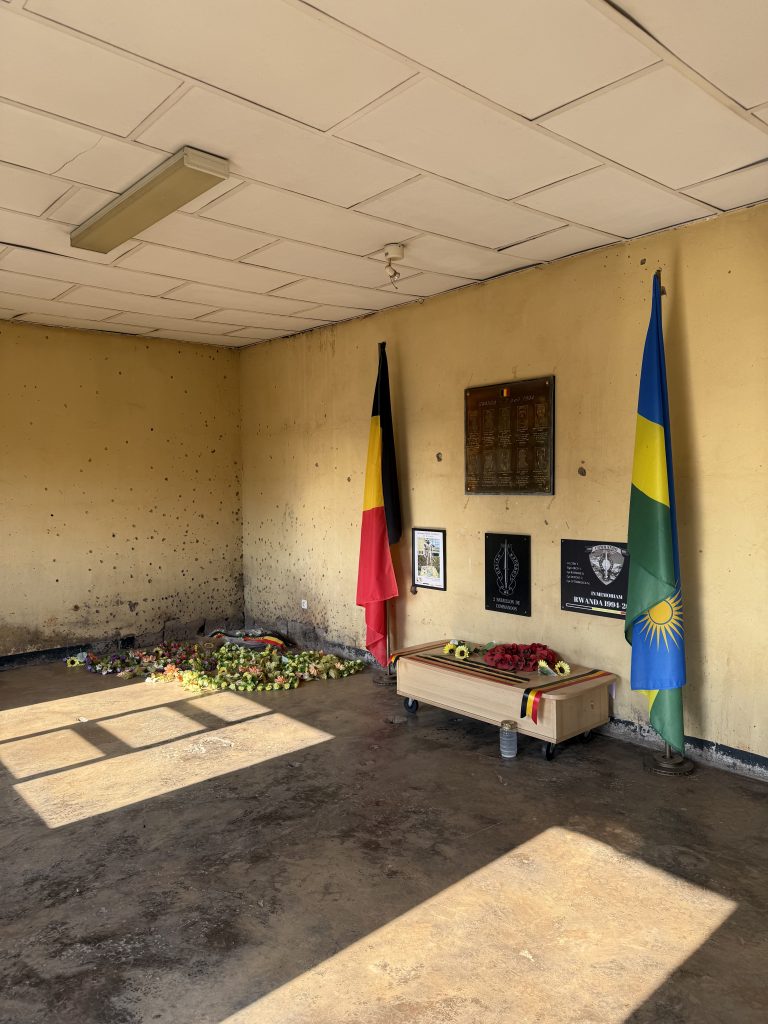
A country that still has taboos is a country that still hasn’t healed. Although it’s not working with the ethnic divide, Rwanda is trying to fight other taboos such as the Genocide itself. The Genocide Memorial is a spectacular museum that not only speaks about the Rwandan Genocide but also about other genocides that happened in the 20th Century. When I went to the memorial, I bumped into a large group of highschoolers that were also visiting the venue with their school. I don’t know about you, but when my school took us out for a museum, trying to keep us quiet and attentive during the visit was a “mission impossible”. After all, kids are kids and they will bring their chaos wherever they go.
But this time it was different. At the exhibitions, not a single scream or loud voice was heard. The hundreds of kids read the informative messages while taking notes with absolute respect. Not a single game was being played between them. Just absolute silence and attention to the explanations. This is a clear example of how Rwandans, from a young age, are aware of their history — and they learn to respect it. For them, it constitutes an important feature of their identity to the point that it is respected as something superior to anything else. Something similar with, say, WW2/Holocaust in Europe, could not happen nowadays.
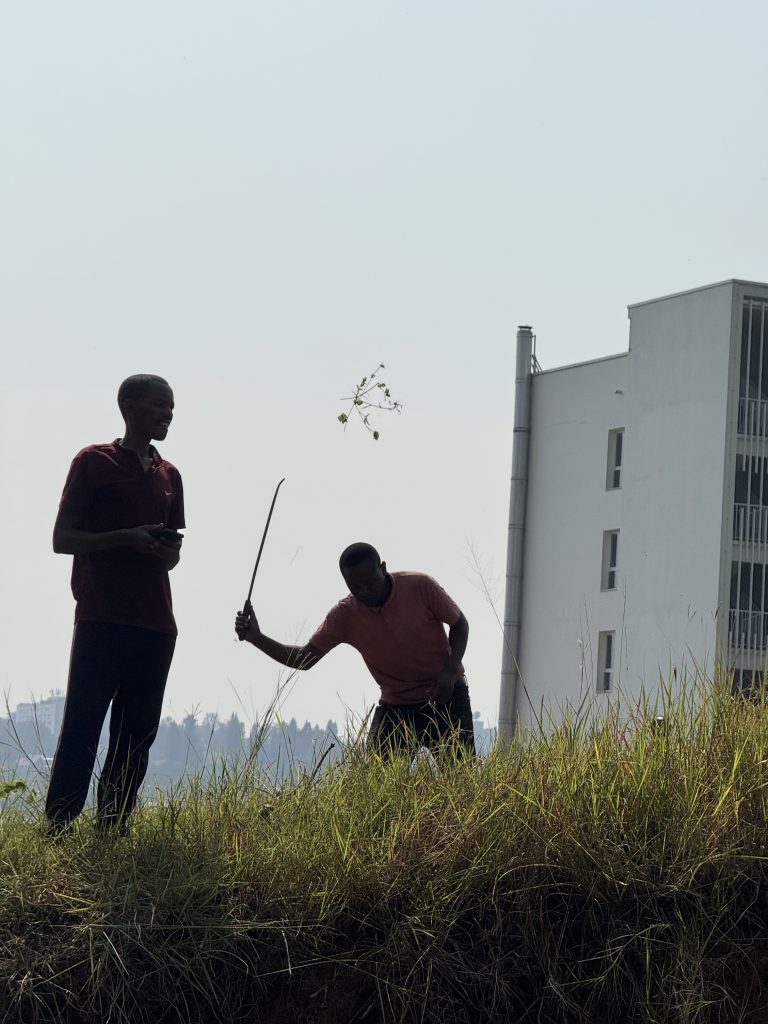
Another way Rwandans remember the genocide is the “Umuganda”. It is some sort of mandatory community service during the morning of the last Saturday of every month with the objective of making the population remember the genocide and work together as one to lift the country. During that time, Rwandans are obliged to leave everything they are doing and join small group projects such as the cleaning of a street, cutting grass or building a wall.
I was lucky enough to be in Rwanda during Umuganda, so I left my hotel early on Saturday morning to witness it with my own eyes. The streets were completely silent; not a single car in sight besides vehicles with Ugandan plates and police cars controlling that everyone is abiding with their obligations of remembering the genocide. They say people cope and remember in their own way. In Kagame’s Rwanda, the Umuganda has to be the way people remember about the genocide, and those who don’t face charges. After walking for half an hour without seeing a single soul in the street, I started hearing some sort of chants in the distance, bingo. As I approached the area I started to see a large group of people dancing and singing as they cut grass from a field and swept the floor of a recently made street.
When I arrived at the place where everything was happening, many turned their heads to notice me (quite easy to spot me as I was the only white foreigner) but continued unbothered singing and doing their work. As I was pulling out my phone to record the moment, a lady approached me and started talking to me in Kinyarwanda. At first I didn’t understand what she was saying but it soon became evident as she handed me a broom and repeated: “clean, clean!”.
Soon I found myself being the center of attention. I started cleaning the street trying to imitate what the rest was doing, while not being sure if I was doing it the right way. I soon started hearing some men up on the field shouting “muzungu!, muzungu!” (which means “white guy” in Swahili, but it’s also used in Kinyarwanda) and pointing at me while laughing. I didn’t know how to feel: happy? embarrassed? lost? The leaders of the group started recording me with a big smile on their face. “Well, at least they are going to have some funny content for their Instagram”, I thought.
Suddenly, one man up on the field started shouting at me. However, he was not like the others. He was furious at me — I could not understand what he was saying, but he was fussing with his grass-cutting machete while saying “muzungu” once every four words. He was definitely not happy to see me and his anger continued to mount as I minded my own business. Then, I suddenly remembered how most of the killings during the genocide took place: with machetes, killing people in cold blood. This was, needless to say, not going to happen to me, but because I simply remembered this fact, I freaked out, gave the broom to the woman and “ran away”
The rest of my days in Rwanda I spent them meeting friends of friends and getting to know their vision of the world and the regional geopolitics. I visited NGOs, churches and got to try ugali (similar to fufu) for the first time, which I absolutely loved. Every museum, neighborhood and person I met in Kigali opened my eyes even more and made me understand the country better.
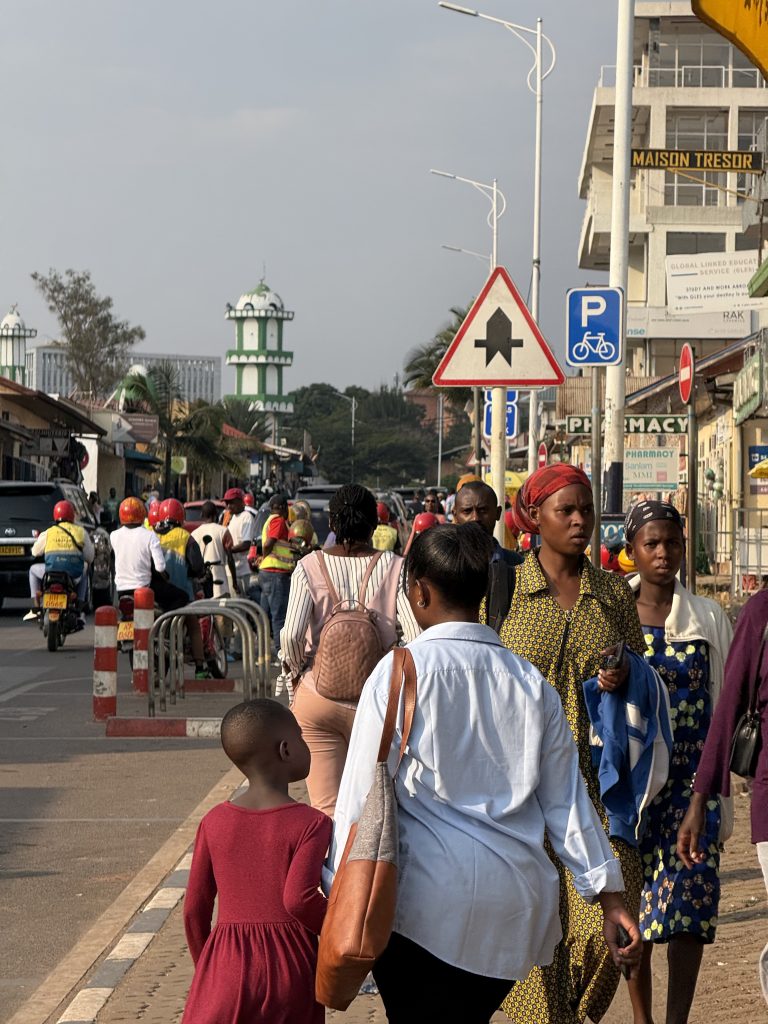
Still, it wasn’t until the last day that I managed to put my thoughts together about the country. And took a trauma for it to happen.
As I was leaving the foundation of my friend in one “mototaxi” (the most affordable way to move around the city) I reached a big traffic jam. My driver made its way through the cars, and when we reached the very end of the traffic jam, we discovered what was causing it. A truck had completely crashed into a man my age on his motorbike. The victim was lying on the floor, his body was completely split in two halves, with his intestines and organs visibly coming out and immersed in a pond of blood. The man was surprisingly still alive, moving his arms and blinking slowly.
There were about 30 people surrounding him…but nobody was doing anything. I could not stare at him for more than 3 seconds without starting to feel dizzy and having a panic attack. However, there were 30 people just staring at him die. They did not move their eyes from him, but they did not try to comfort him either. Not a single person approached him to hold his hand and tell him it was going to be alright…
…because it wasn’t. He was going to die. The lack of reaction from the curious spectators made me realize that Rwanda never healed. Thirty years have not been enough to erase violence and death from the people’s minds. Violence, blood, gore…are still normalized in the collective imagery. My driver, after taking a long look at the dying man, drove past him as nothing had happened.
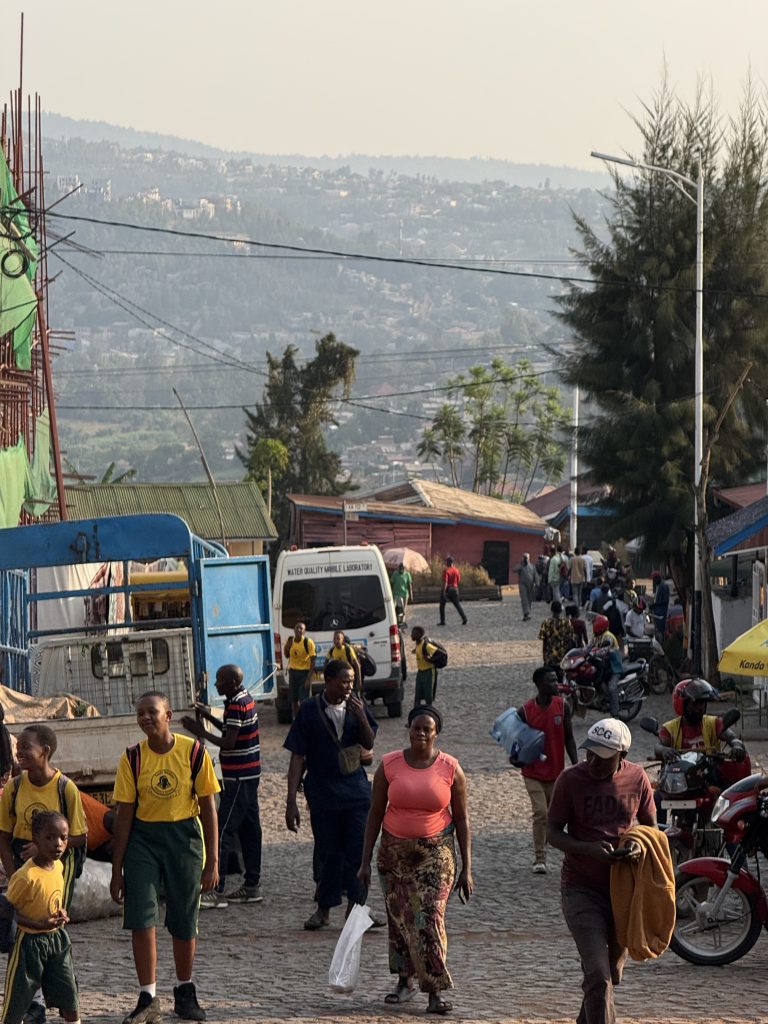
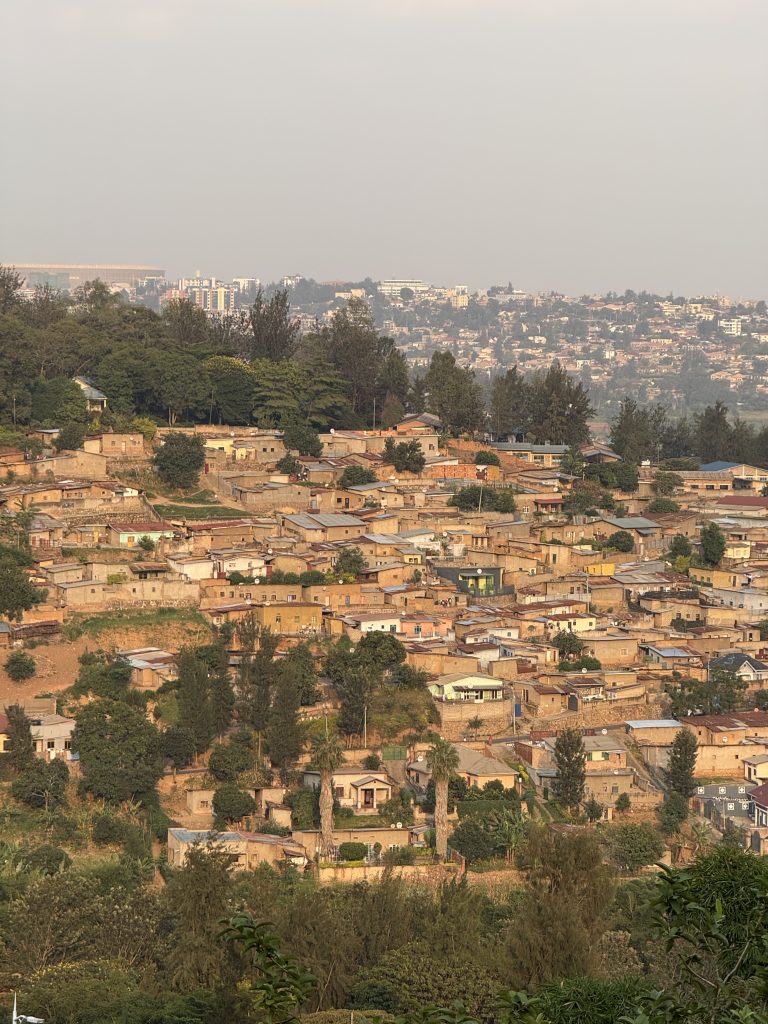
Rwanda has not healed yet, but it does not mean it can’t. Learning from history takes time, and saying that Rwanda has moved on is a mistake. Rwanda is not the “Singapore of Africa”, because a country that hasn’t lived a genocide cannot be compared to one that has.
Thank you, Rwanda, for making me learn more about humanity and history than in 5 years of higher education.
Special thanks to Jordan for helping me build this trip from scratch!