Disclaimer: This article covers my personal experience during Peace Line’s Blue Route 2024. It is not an academic article, and it does not intend to describe the historical events that occurred during the 20th Century in the places we visited. The atrocities committed by the Nazis and the Soviets around Europe are now part of our past. Every monument built to commemorate this past reminds us that no one should experience those horrors ever again. Despite this, human life continues and will continue in the most natural way. We will not forget what happened in such places, but laughter, love, and joy are still part of our lives and we should embrace such feelings in the most respectful, yet genuine way.
———————————————————————————————————————————————————————–
Optimism and reconciliation have driven the construction of the European project since the end of World War II. The same European countries that provoked the two world wars later came to reconceptualize their grand strategies for the sake of human dignity and peace among the peoples. Accordingly, social progress, rights and freedoms, and economic and political integration have established the basis of arguably the most joyful period in European history.
The traumatic experiences of both the two global conflicts of the early 20th Century and the implications of the Cold War until 1991 left a huge mark on how peoples of the old continent regarded themselves. The concept of “European citizenship”, for instance, was first introduced with the Maastricht Treaty of the European Union in 1992, but the notion of a shared European identity is more of a collective construct that now assembles basic rights, freedoms, and social values in a same land. Still, when it comes to the different narratives of our common history, each country has its distinct perspective. Shaped by tales of victories, but also defeats; by ventures, but also retreats; by leaders and heroes, but also deceits. European history is constantly being written, and the role of European youth in all this matrix is constantly evolving.
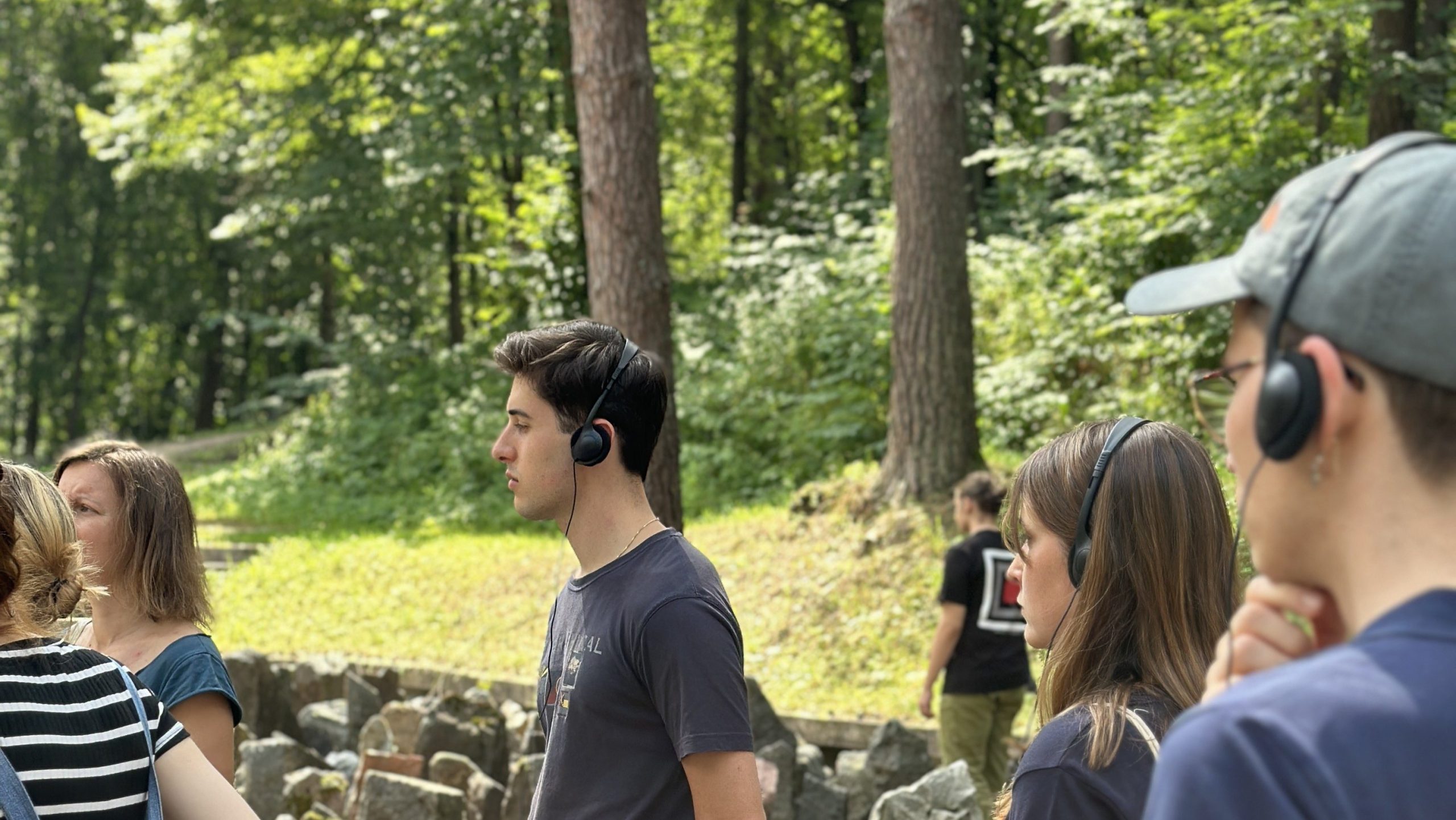
On 15 May 2024, I received an email confirming my acceptance into Peace Line’s Blue Route. Launched by the German War Graves Commission (Volksbund) in 2020 and financed by the German Foreign Office, Peace Line is a pan-European youth initiative aimed at fostering encounters, promoting reconciliation, and educating about Europe’s history during the 20th Century. This unique project is organized through four main routes that take its participants into several European countries to visit places of remembrance of the First and Second World War, the division of Europe, and the European Unification. More specifically, the Blue Route took me and my fellow “Peace Ambassadors” through Latvia, Lithuania, Poland, and Germany to reflect on the stories of countries dominated by Communist and Nazi rule, respectively, and their multi-faceted implications for the lives of their citizens.
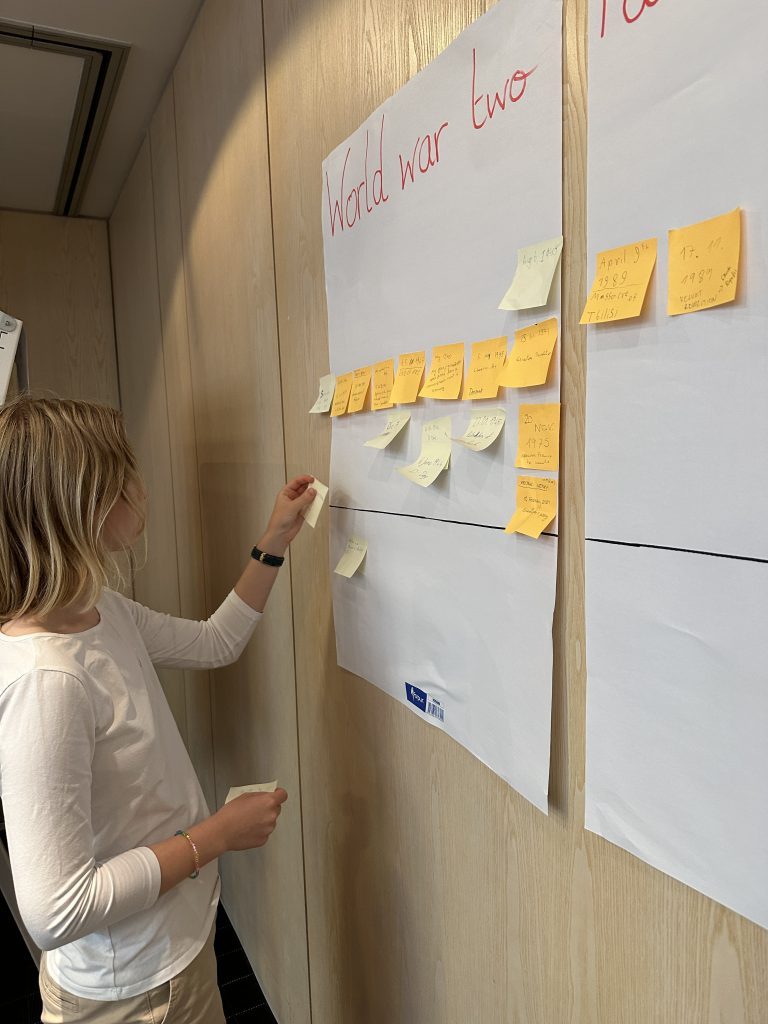
Peace Line’s Blue Route started on the 13th of July, in the capital of Latvia, Riga. We were supposed to meet at the conference room of the Tallink Hotel Riga at 16:00, but we weren’t really checked up on our different means of transport to the city. From Barcelona, for example, I had to take a layover flight to Amsterdam, and then to Riga. The issue was that my baggage stayed in Amsterdam for a couple of days; already a Joan Subirachs classic in my airplane adventures (See A generational odyssey through the North American East Coast, 2024). I was lucky enough to have one of my most loved university colleagues as a Peace Line teamer for the route -Nil, the man who introduced me to this project in the first place- and I could borrow a couple of his tees for the first few days. Talking about the early days, we spent most of the working hours getting to know each other and our backgrounds and reflecting on the concept of peace. We were once asked to define it, and the word “deterrence” popped up in my mind immediately. A “Si vices pace, para bellum”-kind of thing that was possibly too pretentious but that I considered somewhat worthy of discussion.
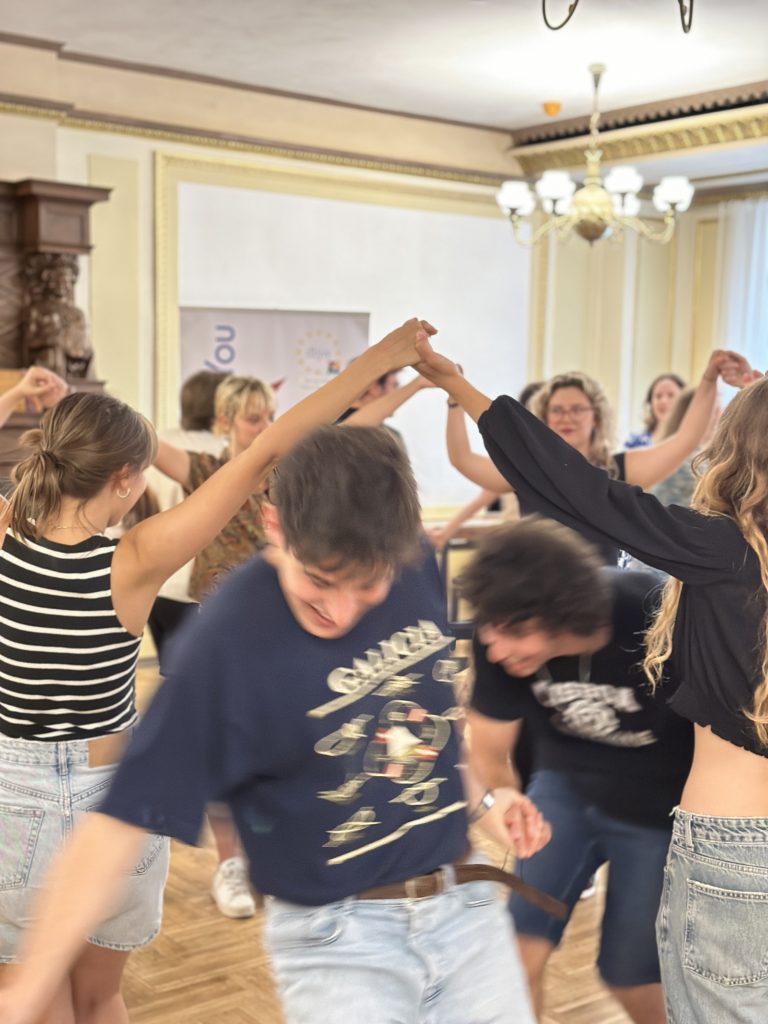
As part of the program, we visited the highly-regarded Occupation Museum (the tour guide explicitly stated that His Majesty King Felipe VI of Spain requested a stop at the museum during his official visit to the Latvian capital last June), we attended a cultural evening at the German Baltic Youth Office to listen and dance to traditional folk songs, and we also visited the Zanis Lipke memorial and the Popular Front Museum. Outside of the program, our colleague Tornike introduced us to the wonderful country of Georgia, and its gastronomy, and its geography, and. We were introduced to Georgia in the entirety of its dimensions. We also celebrated Spain’s goals in the UEFA Euro final -Lucie particularly celebrated Cucurella’s assist- and we tuned our voices singing in a basement karaoke in the city center. You could tell it was all about confidence because I had never seen a group of non-Spanish-speaking people sing La Camisa Negra in Spanish with such enthusiasm, especially Alice. It was European bonding all along, and I loved that.
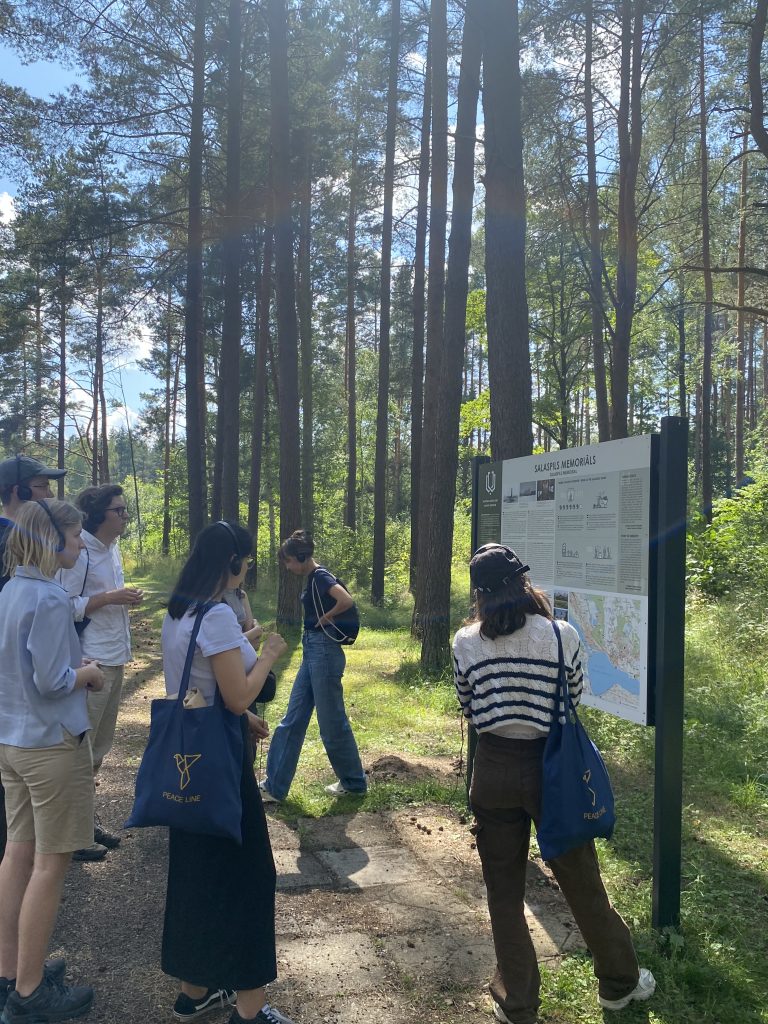
Before leaving Riga, we visited two open-air memorials commemorating victims of the Nazi regime during World War II. Accompanied by Sergey Rizh, the architect of the site, we first visited the Bikerniki Memorial. This place commemorated the almost 42.000 murdered people by local Nazi collaborators between 1941 and 1944. Mr. Rizh introduced us to the notions of memorial design and the importance of the symbolic significance of such places. The second memorial, Salaspilis, was a labor concentration camp during the Second World War that now depicted a rather compelling place. A heartbeat sound filled the silent atmosphere of the memorial, while several Soviet-era brutalist sculptures defied the past with a sharp look into the forest. It was my first encounter with this kind of memorials and it was an emotional, yet daunting experience.
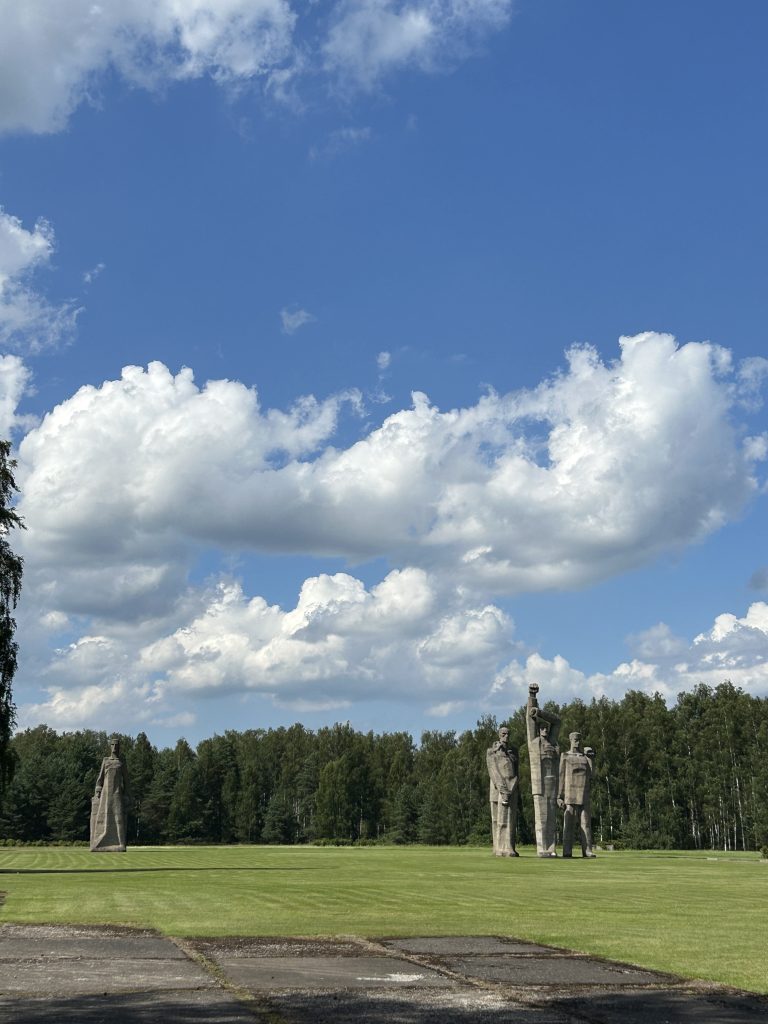
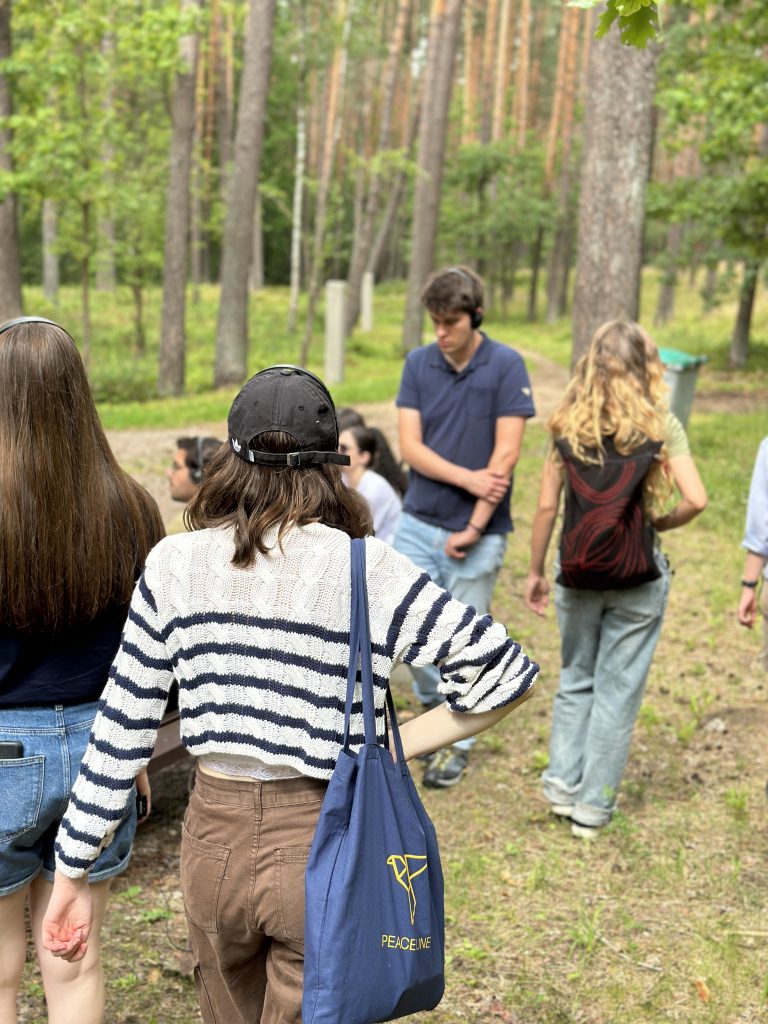
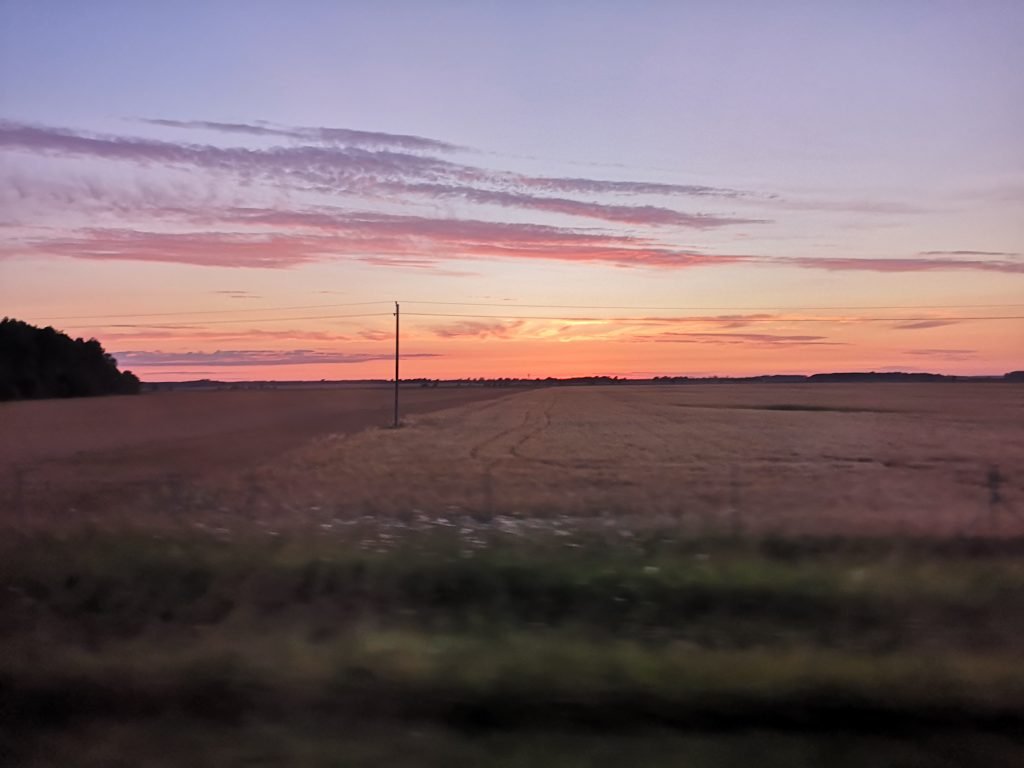
Around 19:00, our bus driver was waiting outside of the hotel. We were about to drive for about five hours to go to Kaunas, Lithuania. It was our first major bus drive of the route, and the sunset on the wheat-field horizon and the road trip games made it as smooth as it could be.
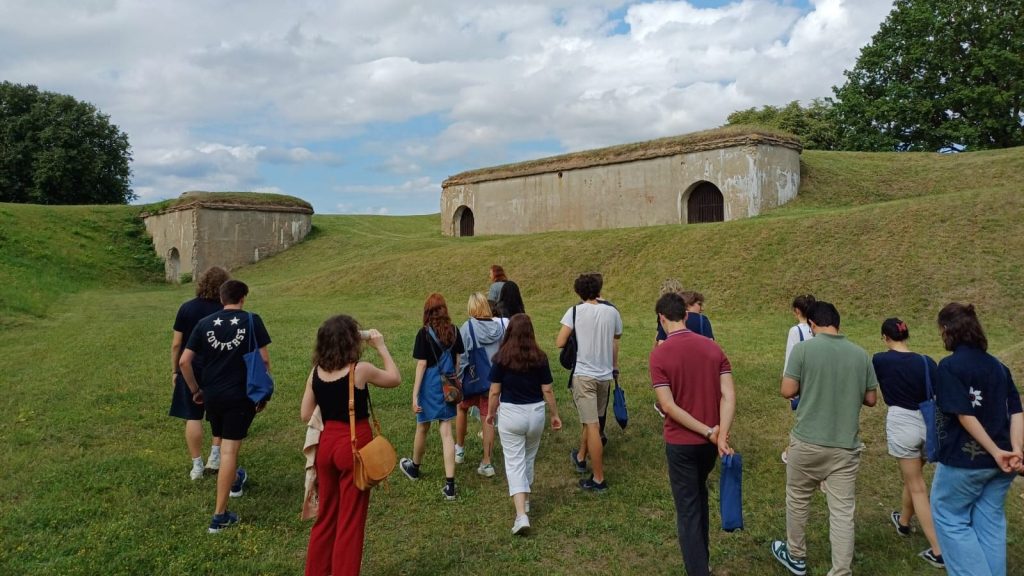
In the ancient Lithuanian capital, we visited Fort IX, a fortress built in the late 19th century that was later used by the Soviets as a prison, and by the Nazis as a mass murder site. We explored the museum on a guided tour, saw the tanks, and followed the narrow alleys of that sturdy building. Apparently, it was not sturdy enough, as some bird placed its little nest in the end of the cannon of a tank inside the armory. A perfect metaphor for such a place.
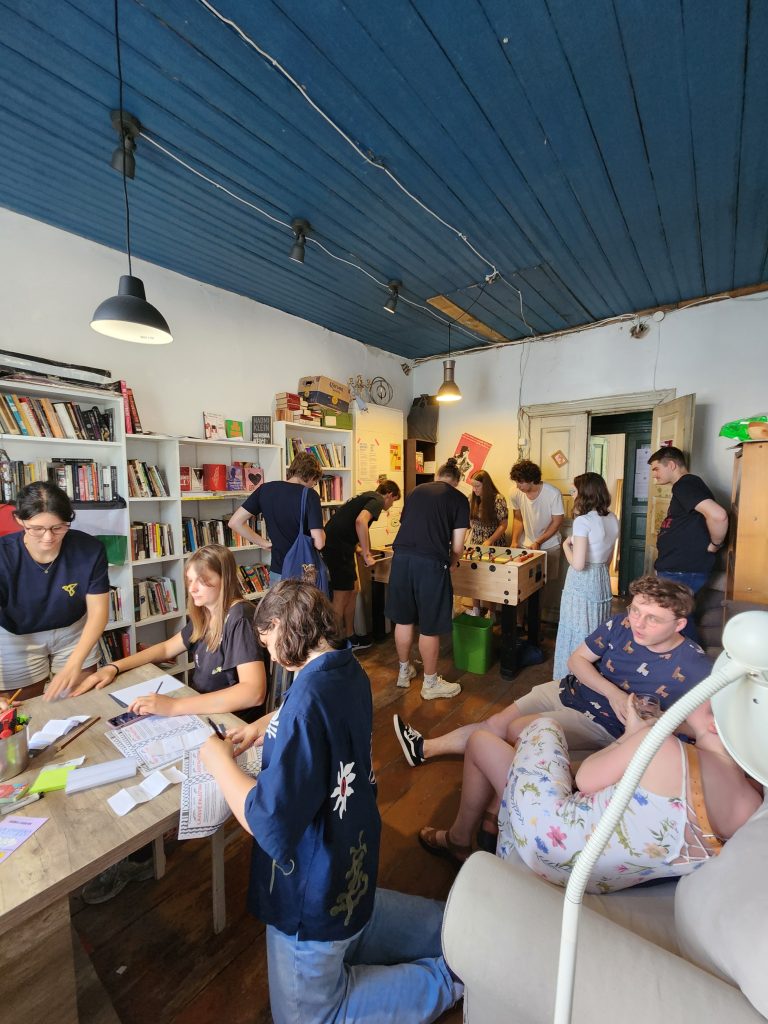
The next day, we also visited the Social Center Emma, named after the Kaunas-born anarchist Emma Goldman. This grassroots collective established a social center on the upper floor of the blue wooden house at the intersection of A. Mickevičiaus and K. Donelaičio streets. Climbing up the creaking stairs and delving deeper into the activities of the Center, we found a small library with different critical theory-related publications, stories of underground social movements, and an uneven table football that always favored the red team. Between Ahmed’s -the chef of the place- delicious dishes, we played quick matches and discovered Jule’s massive wrist strike. In Kaunas, we also came upon Lara’s interest in metro trains and radio towers. It seems that Croatia did not make the most out of their Next Generation funds, and now Croatian people get mesmerized by this kind of infrastructures every time they go abroad. Interesting!
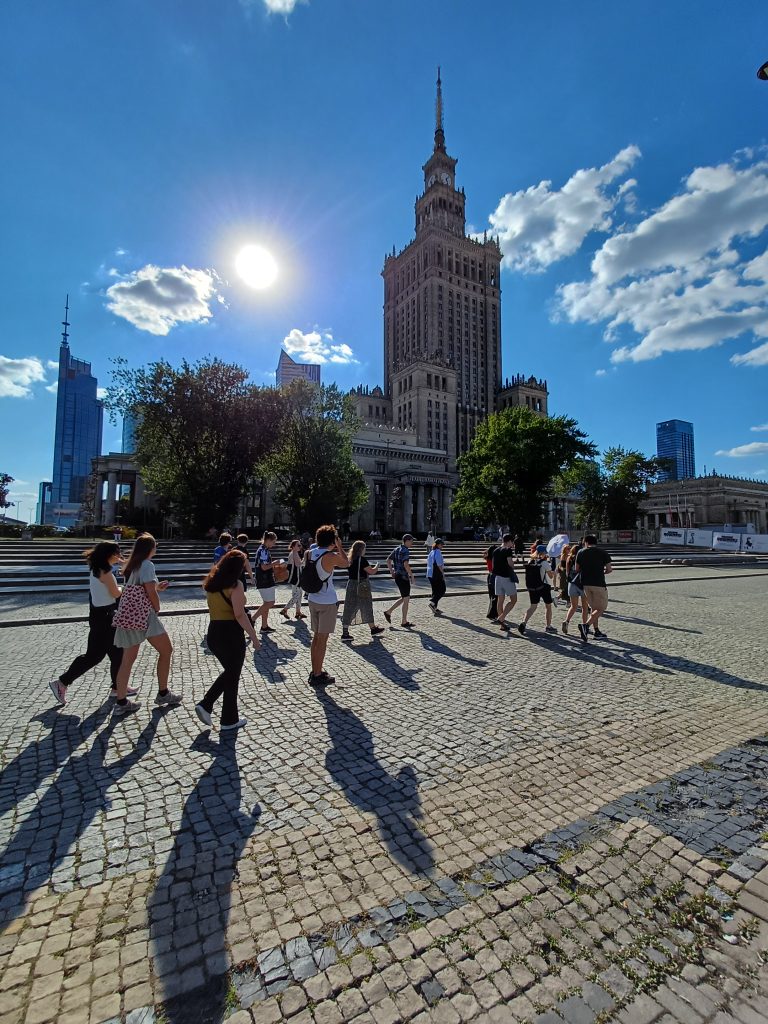
The next day we hopped on the bus again, this time to go to Poland’s metropolitan city. The turbulent history of Warsaw was inherently evident as we approached the city through the main road and we could appreciate its peculiar skyline. Along with the modern skyscrapers (antennas included, Lara), symbol of the current economic power of the city, there is also a Gotham-esque building that recalls the soviet heritage of this country. In fact, this is exactly where Goska started the “Warsaw city tour” right after checking in at our hotel, standing just below the former tallest edifice of Europe, the Palace of Culture and Science, an unwanted gift from Stalin to Poland in 1955. After one more gaze at “Stalin’s Middle Finger,” we continued our city tour to the architectural remains of the Jewish ghetto. Those streets now hardly evoke those heinous times but in the mid-1940s they constituted the largest of the Nazi ghettos.
Next, we headed to the Warsaw Army Garrison building, an edifice that bore the scars of shots fired during the German invasion of Poland, the Warsaw Uprising, or the Vistula–Oder Offensive of the Red Army; the three potentially determining.
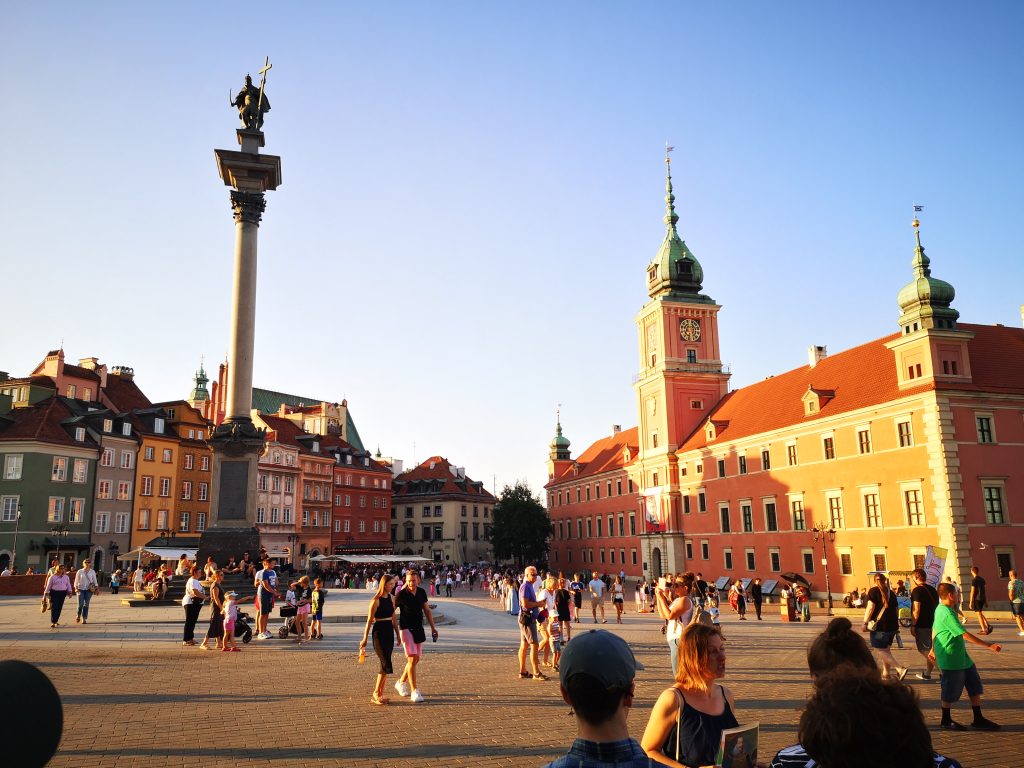
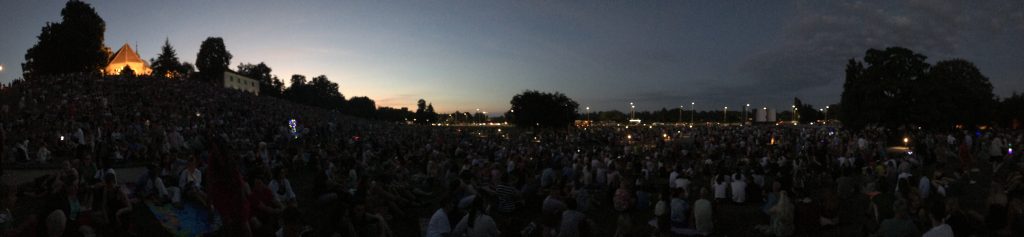
Finally, we stopped at the Bristol Hotel’s entrance to appreciate the wall of doorknobs arranged in a Fibonacci spiral with the names of visitors, encompassing everyone from Pablo Neruda to President Kennedy. After such a long walking session, we had the chance to stay in the city center after sunset, as we attended a spectacular ABBA multi-media show that transported us back to 1976. This was something that really emphasized the pan-European and inter-generational connection from all our different backgrounds; nothing compares to the nostalgic mystique of disco music from the eighties.
In the morning we woke up as early as 07:30 because, as always, we were already on a tight schedule. We had breakfast in Hotel Lord, also known as “The Embassy” for some members of our cohort for its diplomatic appearance. It is worth mentioning that by day seven, some of the participants had to leave because they contracted Covid-19, which was so unfortunate. After all, the group started to unite by then. With all the uncertainty of that situation, we resumed our plan and had our first stop at the NGO Witryna Domu Wschodniego. There, we got to learn about Poland’s Soviet era, especially through the stories that Ms. Anna Dodziuk, a former activist of the democratic opposition in communist Poland shared with us.
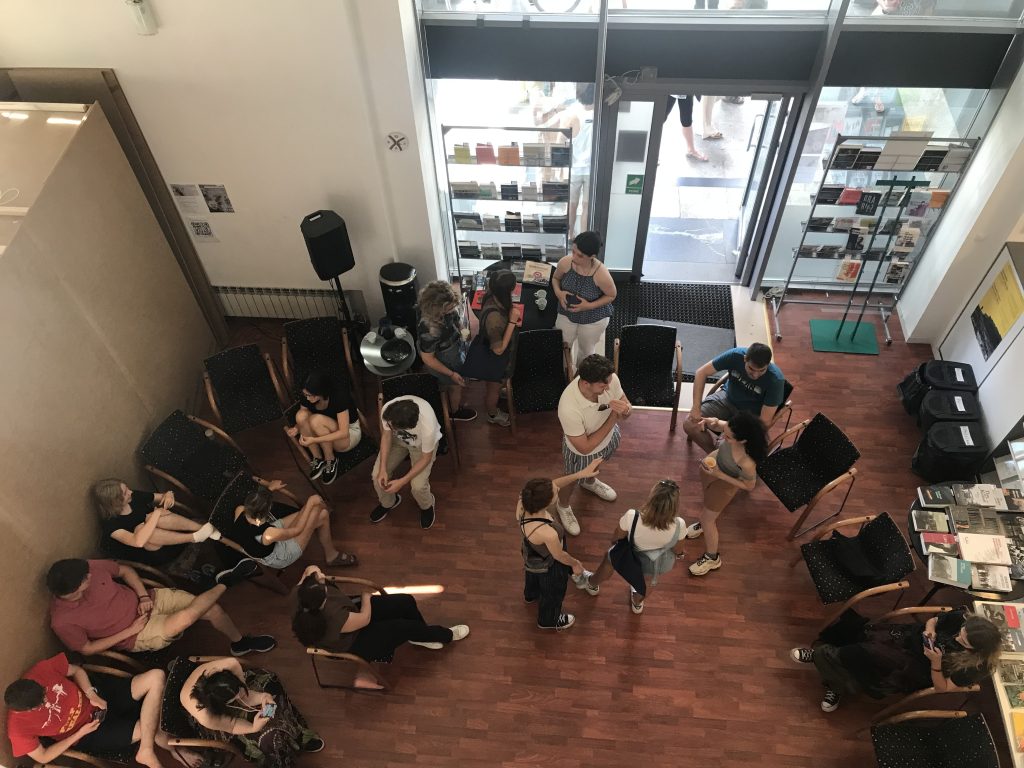
After some free time in the city and a preparation workshop, we reunited again to visit another museum. This time it was the turn for the Polin Museum, where we got to experience and learn about Jewish history, traditions, and identity. As part of the official program, we also visited the Warsaw Rising Museum, which is dedicated to the Warsaw Uprising of 1944. The museum offers an immersive and interactive experience with multimedia exhibits, personal stories, and artifacts that illustrate the struggles and bravery, serving as a solemn reminder of the high cost of the fight for freedom.
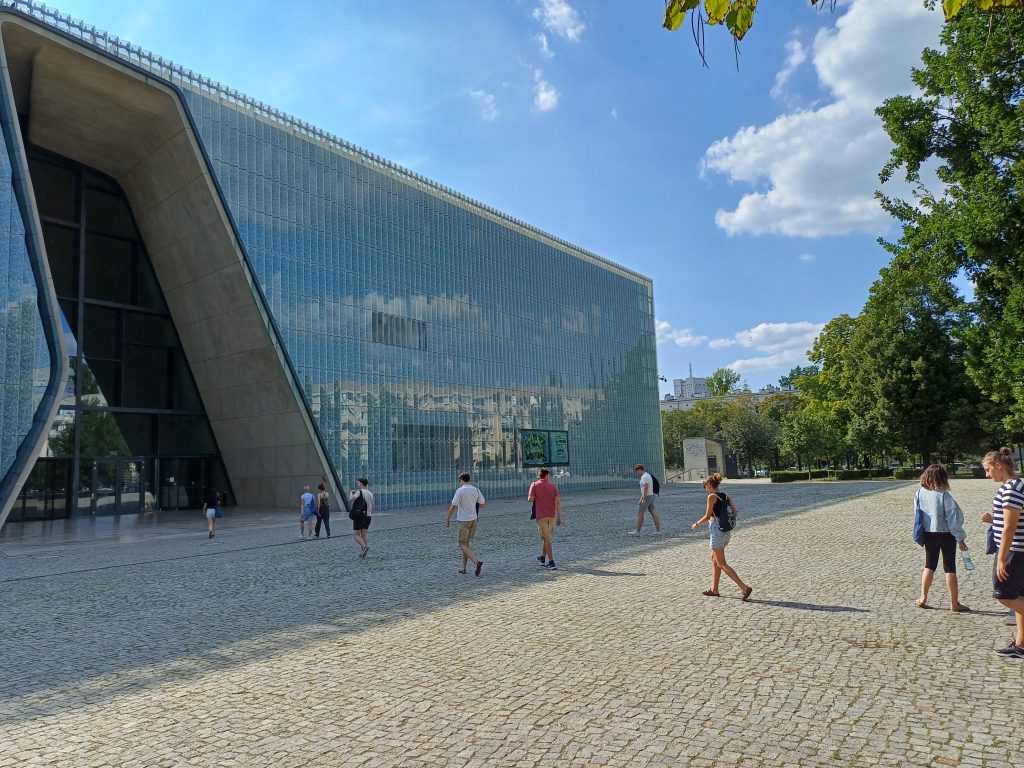
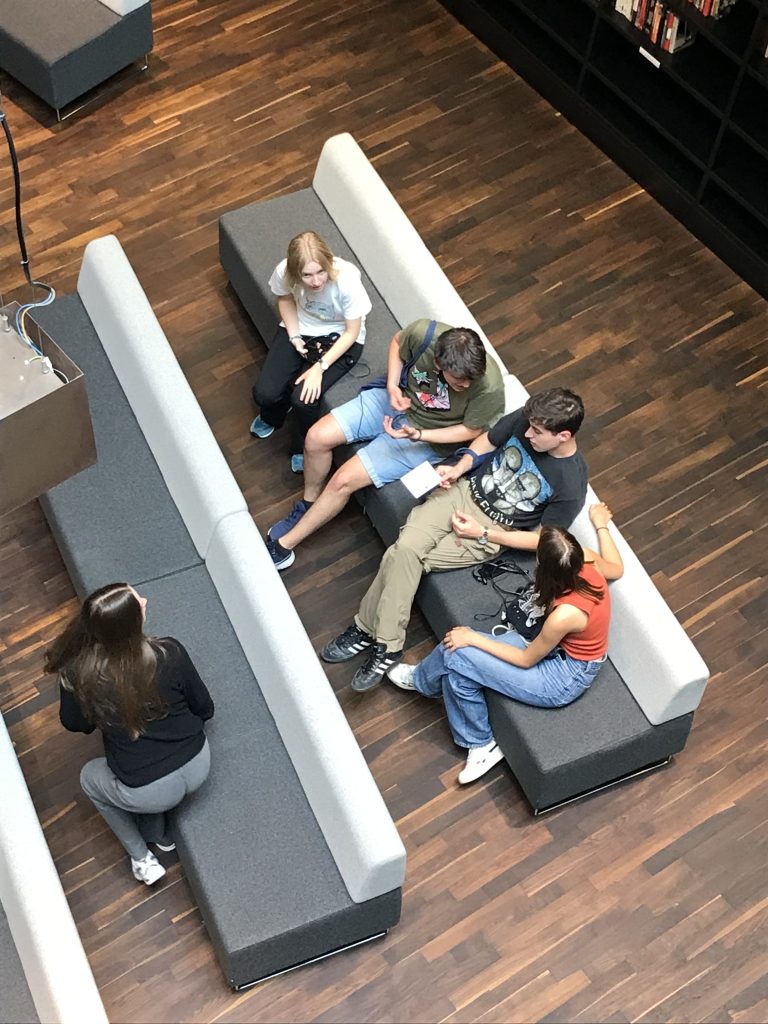
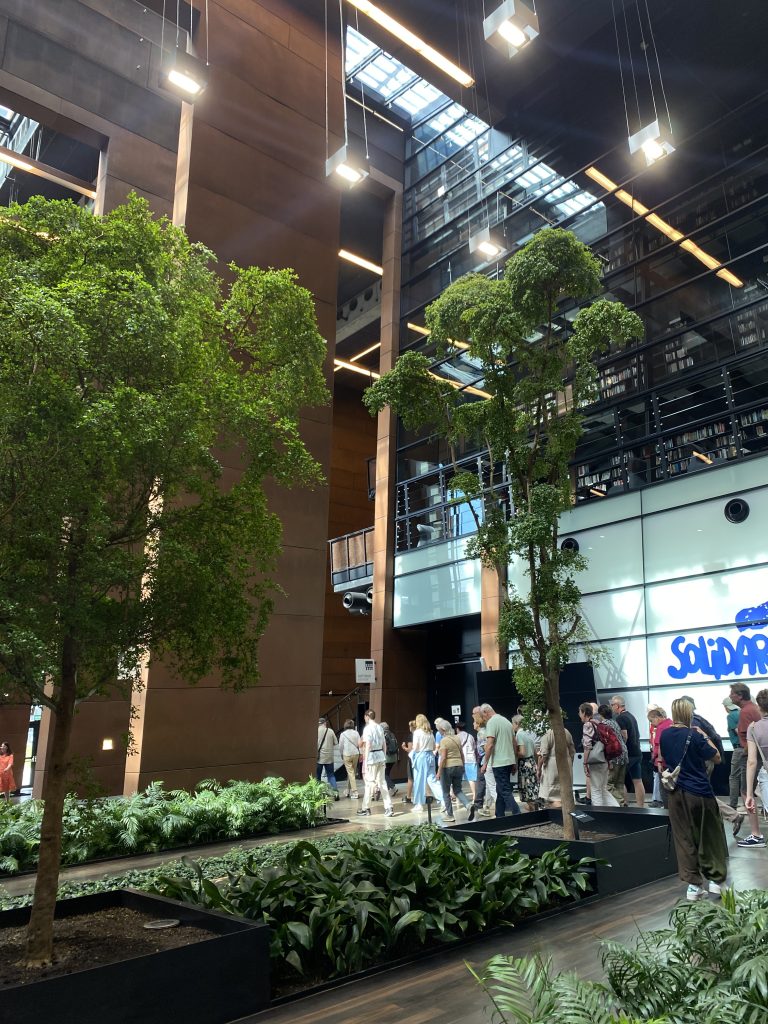
From the Polish capital, the journey took us to the north of the country, to the Baltic Sea. Despite the well-expected summer rain, our cohort began to tour the city of Gdańsk right away. We went to the old building of the Polish Post Office of Gdańsk where we were told the story of the few employees who resisted the first hours of the German invasion. We also visited the wonderful European Solidarity Centre, as well as the exact place where World War II began, the Westerplatte peninsula. With yet again a Soviet-style monument of a bayonet sunken into the ground, and some inspiring words of the Pope John Paul II, each one of us thought about our own Westerplatte. Our own “order of truths and values which must be held and defended” (Pope John Paul II, 1987). This was a perfect introduction for the last and possibly the hardest stop of our route.
On our way, I could only think about how close hell was to earth. I could only think about how undisturbed life was just a couple of minutes away from Stutthof. It was something I would come to understand at the end of the journey. Our Peace Line teamer Kamil, who works as a professional guide in the Stutthof Concentration Camp Memorial, took us through the site. Words cannot describe the sensation of standing in front of the death gate and seeing the crematorium chimney. Dark, horrible stories; some of them well-documented, others still waiting to be told. Overall, an intense experience from which we left with impressions that will last a lifetime.
Our route was coming to an end, and so was our road trip with Modris, our bus driver for the entirety of the journey. Modris was a rather reserved person; he never presented himself, but he was part of the plot. At some point, I changed seats to sit in the first row. I observed his fluent driving skills carefully, and the way he waved at other bus drivers along the way with a slight head tilt and a cool two-finger salute. A shot worthy of a movie scene, especially with Bob Dylan’s Queen Jane Approximately playing in the background. Pedro also enjoyed that song very much.
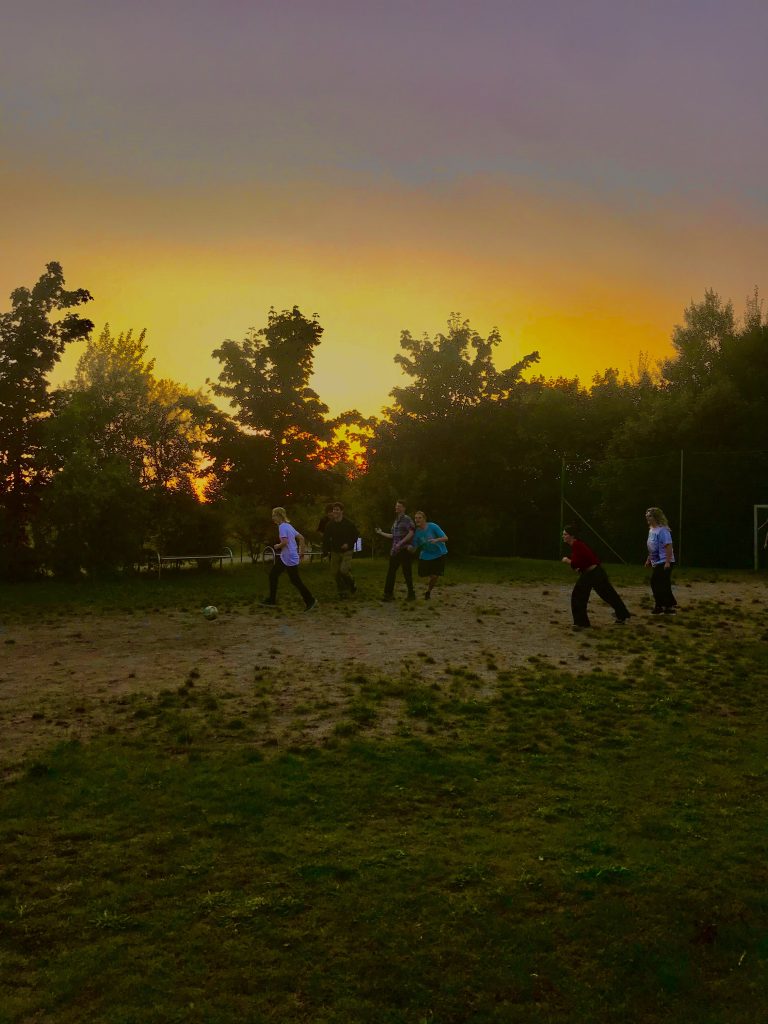
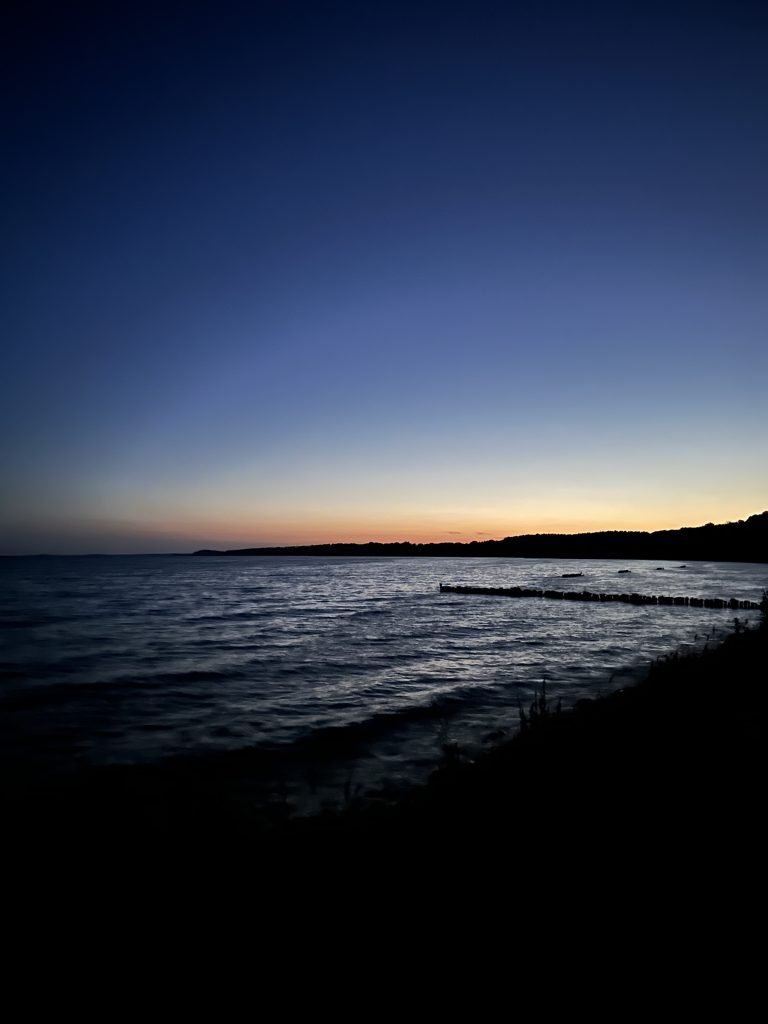
We concluded our Peace Line adventure on the island of Usedom, in Volksbund’s Youth Education Center Golm. Those last days on the island were all about contemplation and farewell. We acknowledged our “Peace Ambassador” status, we scored goals, and we designed our Memory Book between improvised poetry sessions, toothpick reflections, and night walks to the lagoon.
In all, this Peace Line project is what Europe is all about: an intercultural reality with myriad narratives and hidden stories. As Nil wrote back in 2021, “Only greater awareness over this diversity will allow us to construct a more cohesive and lasting European project”. That is the purpose we are working towards.