Timor-Leste? What is that?
If someone told you to take a map of the world and choose a country to travel to, I could bet a lot of money that your first choice wouldn’t be Timor Leste. In fact, if you went to a class full of university students and asked one by one if they knew that country existed, most of them would say ‘no’. I don’t blame them, this country is probably the (or one of the) most “peripheral” countries out there. And that’s what makes it awesome.
Let’s do another “social experiment”: approach a group of backpackers at a bar in Bangkok and ask them if they are planning to visit Timor Leste. I can bet this entire webpage they will not give you an affirmative answer. In fact, it would be even more probable that they ask you: “what is that?”
Timor Leste is simply off the beaten path for any traveler in Southeast Asia. Not even the most curious tourists reach the country. A quick search in Google will show you that there is simply nothing special about it, or anything that might make it worth it the price of getting there. People simply don’t even consider it.
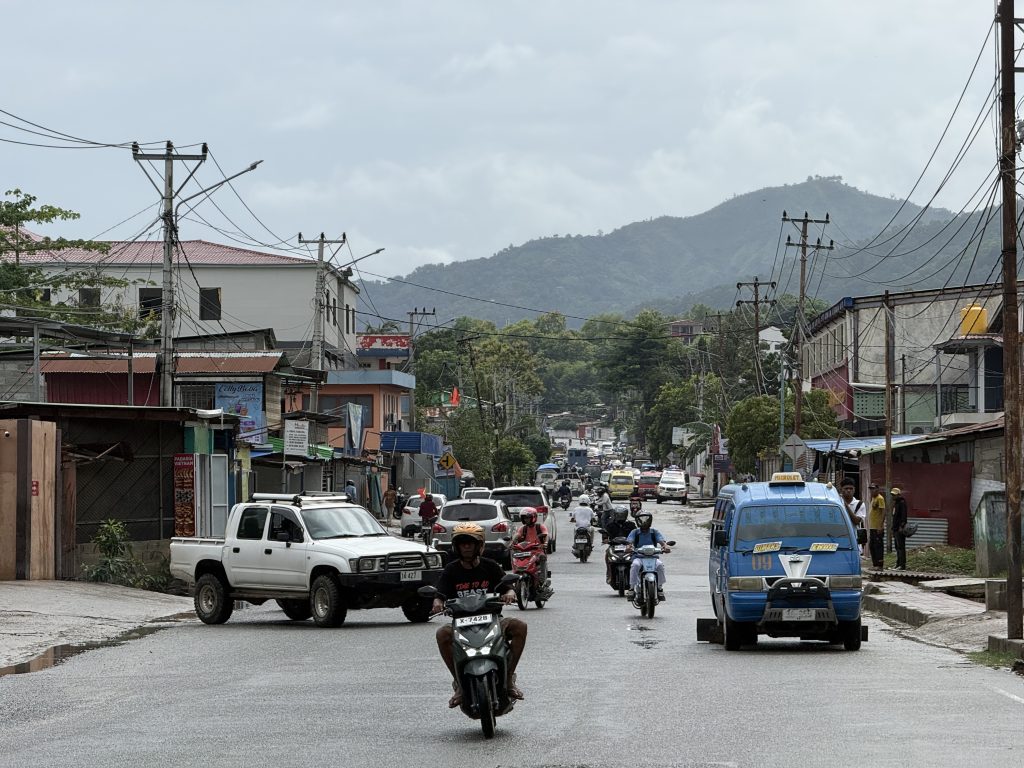
During my exchange in Singapore I managed to visit nine out of the eleven countries in Southeast Asia. Ever since I have been coming back to the region for numerous reasons, but never to visit the two countries left in my list: Myanmar and Timor Leste. Myanmar might take a while, at least until its Civil War becomes more…predictable, in a sense. As for Timor, it reached a point where I couldn’t justify to myself why I still hadn’t been there after visiting Malaysia for the 11th time. In January 2026, I finally booked my flights and landed in Dili on a rainy Summer morning.
The struggle of getting there…and getting out
Part of the reason why people don’t go to Timor Leste is because of how remote it is…and how expensive it is to get there. The airport of Dili, the capital, is probably one of the most rudimentary pieces of key infrastructure that I have seen in the region. It looks straight from the 70s. I have seen bigger and more sophisticated airports in islands of less than 10,000 people. We’re talking about the capital of a sovereign nation here.
The airport ground staff leave the checked-in luggage at a ridiculously small belt while the tourists have to complete an e-arrival form at one of the two computers available for this task. The form can be completed from a normal smartphone, but the internet connection is so poor that they had to provide those old Windows 94 computers for tourists to be able to fill the questionnaire and enter the country. There is no arrivals area — you just exit baggage claim to the road outside. As it was pouring down, the small area that enjoyed the protection of a roof was completely packed with people and I could barely make it out of the airport. That was my first impression of Timor Leste.
Given the state of the airport (and since demand is so low) there are barely any flights to the country. As I am writing this article, there are just five routes abroad: Bali, Xiamen, Singapore, Darwin and Kuala Lumpur. The latter was just opened some months ago with a low-cost carrier called “Batik Air”. Despite it being low-cost, I paid around $250 for a one-way ticket. Since there are almost no flights in or out of the country, the prices are extremely high no matter when you book your flights. Only the extremely wealthy Timorese, diplomats or business-people use these flights…and random tourists like me.
Spoiler: getting out was also a challenge. I had decided to come back to Kuala Lumpur from Kupang, a city on the Indonesian side of the island. However, when I went to the office of the “Babaduk Express” to buy my tickets from Dili to Kupang, I learned that the bus was under maintenance that week. I ended up buying another $200 flight out of Dili, this time to Bali, the cheapest option, with their national carrier: ‘Aero Dili’. Timor is not made for the lazy tourist, but trust me, it is truly rewarding.
Escaping globalization
Timor has almost no tourists. I heard somewhere that the total number of visitors it receives per day is not bigger than 10, and that not only includes tourists but also those visiting for work. During my three-day trip, I was the only non-Timorese visitor that I saw. Not a trace of the usual random tourist that you see in small countries. After reflecting on my trip, I think that’s one of the reasons why it was truly special.
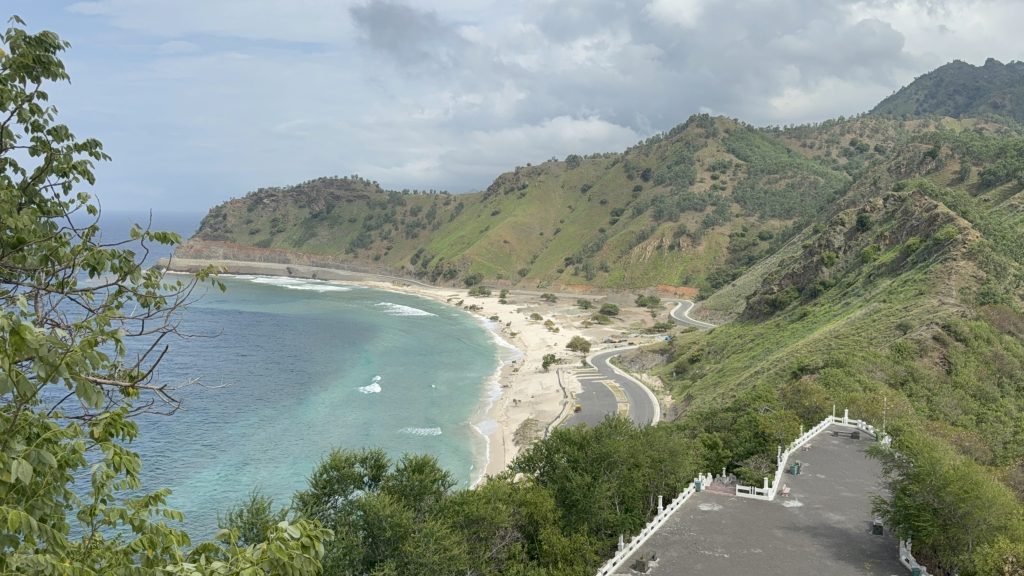
Timor truly escapes globalization in a unique way — let me try to explain it. Think about it: there’s almost no tourism. The country is hardly ever in contact with the “outside world”, other than through diplomats, businessmen/women and the Internet, which works quite badly around the island. Other than that, Timor is its own bubble that escapes globalization and everything that it implies.
As there is no “tourism industry” in the island. You will never find taxi drivers harassing you to take you to the city center to then rip you off. There are no famous hotel brands in Timor, nor the usual infrastructure/businesses for tourists. No trace of “free tours”, Starbucks or matcha latte cafés. You want to move around the country? You better learn how to use the public transport system, the “microlets”, which I actually found to be quite efficient, but it took me a day to figure out.
Timor just lacks everything. For good, in my opinion. It is truly authentic. Globalization has made us too lazy, too reliant on fast wifi, Uber, “original” restaurants/cafés that in the end are all the same and structures that sound familiar anywhere you go. Traveling to Timor is like going three decades back, where not everything looked “the same” in an abstract sense.
Escaping globalization comes at a cost, though. As there is no demand, and also little offer of hotels, I struggled to find a cheap, decent accommodation for my stay. A night at a normal hotel in Dili cost around $100, completely out of my price range. I ended up finding some apartments not too far from the city center for under $30/night. I don’t exaggerate when I say it made it to my list of worst places I’ve ever slept at. The whole place was rotting in mold. Spiders bigger than my hand roamed freely all around. No electricity nor internet at night. And the worst part: the water from the shower smelled like rotten eggs, which forced me to use my drinking water to shower for three days. As I said before — Timor is not for the lazy tourist.
In other less-developed countries you can still see the usual places for expats: bars selling imported beer, beach clubs for the rich, private schools for expats’ kids…etc. In Timor I didn’t find any of that. Dili, although pleasant, seemed somewhat boring. I imagined myself being a diplomat with a four-year assignment in Timor — what would I do in my free time? Fly to Bali? I am still wondering what expats do for fun in the country — or even locals. I simply did not find any forms of leisure at all, not even in Dili. What do people do for fun there?
On the street, people stared at me as if I was an alien. In their eyes I saw a mix of surprise and curiosity. I won’t lie, at first it was quite uncomfortable, but then I started getting used to it and I understood it was just not common for them to see tourists, not even in the city center of Dili. Perhaps the best part of Timor being so isolated from global tourism is exactly this — people are eager to speak with foreigners because it’s interesting to know what they’re doing in the country. People were always helpful, respectful, honest and kind with me. No tourism in Timor implies no scams, no people fed up with hordes of visitors and an overall a genuine experience.
In the city center of Dili one can see the only trace of the globalized world in Timor: a small Burger King with a short menu…and almost no clients.
The weight of history
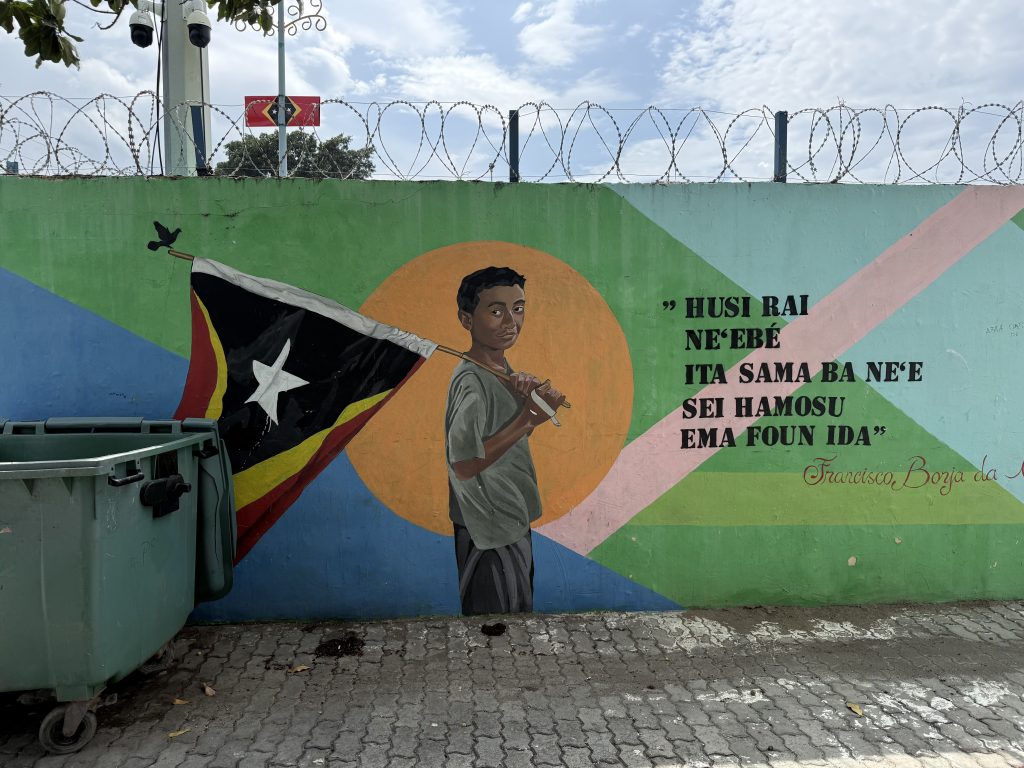
The true reason behind my trip to Timor, other than curiosity, was its history. The young nation suffered a brutal occupation for almost three decades that took hundreds of thousands of lives. Historians tend to agree to call what happened in Timor a “genocide”. Dili is filled with museums that explain the tragic history of the country — from heartbreaking concentration camps for political dissidents to well structured expositions that tell the story of the youngest nation in Asia.
The Indonesian troops, in their quest to smoke the Fretilin (the armed resistance) out of the mountains where it was resisting the occupation, burned several acres of crops, pushing the country to a chronic famine that still affects the country as of today. The generational knowledge on “what to eat” was lost due to the famine, making Timor one of the countries in Asia with the biggest nutrition-related issues.
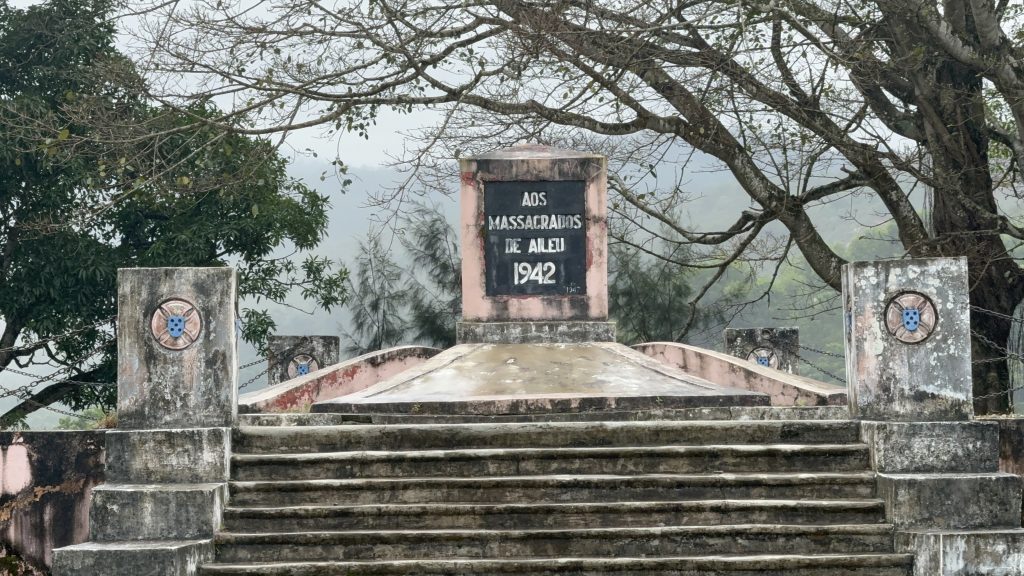
One day I ventured into the mountains to a village called Aileu, a former stronghold of the resistance. The village is quite unique, with old Portuguese colonial architecture, a big church and a massive monument to Nicolau Lobato (first President of the country) quite in the middle of nowhere. Surprised to see a tourist (maybe the first one in weeks), the only worker of the Museum of Aileu took me on a small tour of the Eastern side of the island while explaining to me in a messy Portuguese the history of the region.
Australia, the US and most of the Western world supported Indonesia in its war against the Timorese and its genocide against the Timorese. For these countries, Indonesia was simply containing a communist uprising in a former Portuguese colony, hence the violence was justified.
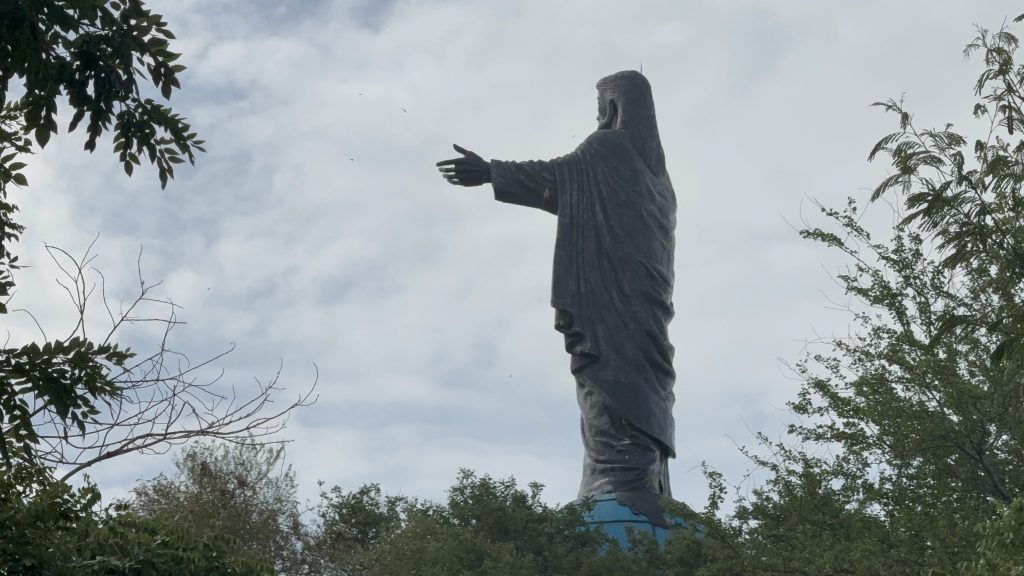
In the early 90s, Indonesia had almost fully legitimized its occupation of Timor. Jakarta gradually opened the “region” to international visitors, constructed monuments such as the ‘Cristo Rei’ to show that they “accepted” the strong Catholic sentiment in the island and everything pointed towards the end of the “Timorese dream of independence”. Their struggle would be buried in history just like many others around the world.
It wasn’t until the Santa Cruz massacre took place in 1992 that the world realized what was really going on in the country. In November that year, Indonesian troops opened fire against a pro-independence crowd protesting the murder of a priest at the Santa Cruz cemetery in Dili. More than 250 Timorese, mostly students, were massacred. The bloodshed coincided with the visit of an important UN representative and some foreign journalists.
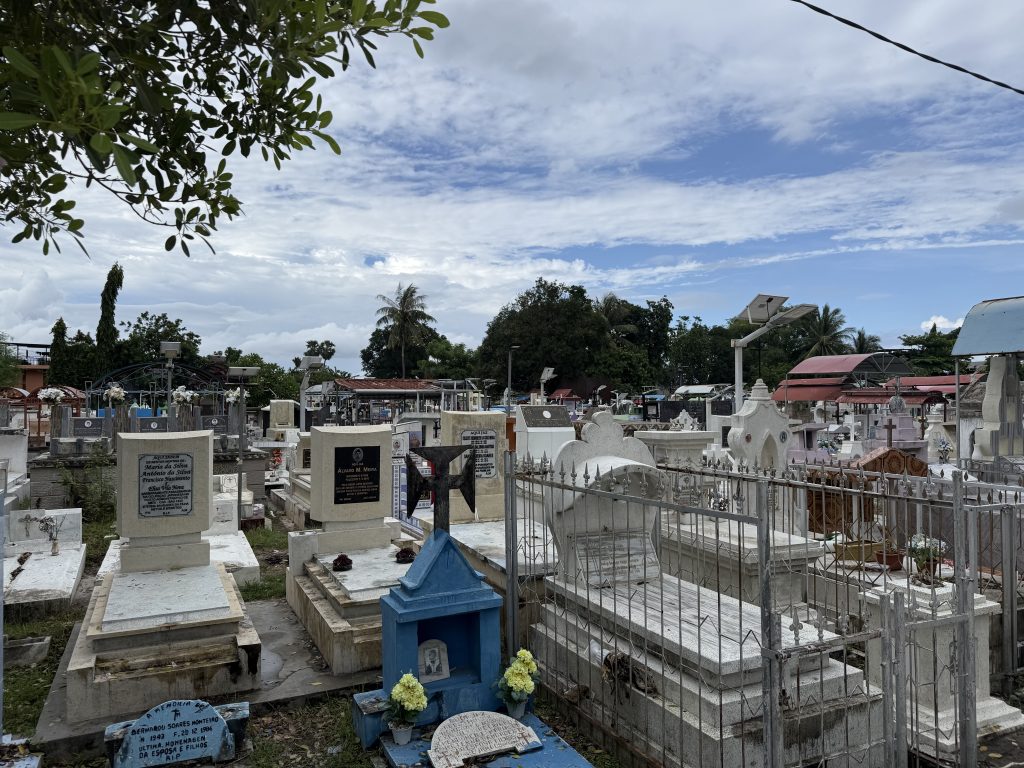
Two American journalists happened to record the massacre with their cameras and despite being threatened, managed to send the footage to Darwin, Australia. There, the Australian authorities, tipped off by Indonesia, tried to intercept the footage in order to prevent it from going public. They didn’t manage to do it. The next day, the images of the truth of the Indonesian occupation made it to the world headlines, sparking protests around the globe and forcing Indonesia’s Western allies to cease their support to Jakarta. Timor finally became independent in 2002.
In a sense, the story of Timor reminds me to Western Sahara. Both were colonies from Iberian countries that managed to get independence quite “late” in history (1975), but suffered from the imperial ambitions of their neighbors (Indonesia and Morocco). The key difference here is that Western Sahara never had an event like the Santa Cruz massacre that could allow the world to see the reality of the occupation. It was public opinion that saved Timor and gave it its independence, while Western Sahara continues to be occupied by Morocco and endorsed by the West, just like Timor was until 1992.
Timor, together with Rwanda, might have been one of the countries where I have learned the most about the weight of history. Despite doing deep research prior to my arrival, I found my trip to be incredibly insightful and left quite a big mark on me.
If you ever go to Southeast Asia, you have some spare money, free time and patience, give Timor Leste a chance, you won’t regret it.