I hardly ever criticize a country I visit. I can find a couple exceptions such as Kuwait or the United Arab Emirates, but my poor experience in those countries had nothing to do with the people of the country but more with the way those nations are configured, where money is the only thing that matters and everything just looks fake.
I believe, in general, that criticizing a country because of your bad experience in the few days one spent there is a very poor idea. How can you go against a whole nation just because you had a couple of disgusting encounters while visiting a small portion of the country? In this short piece, I do not intend to blame the whole country of Sri Lanka for my bad experience. Instead, I will focus on their ridiculous tourist industry and the people who run it.
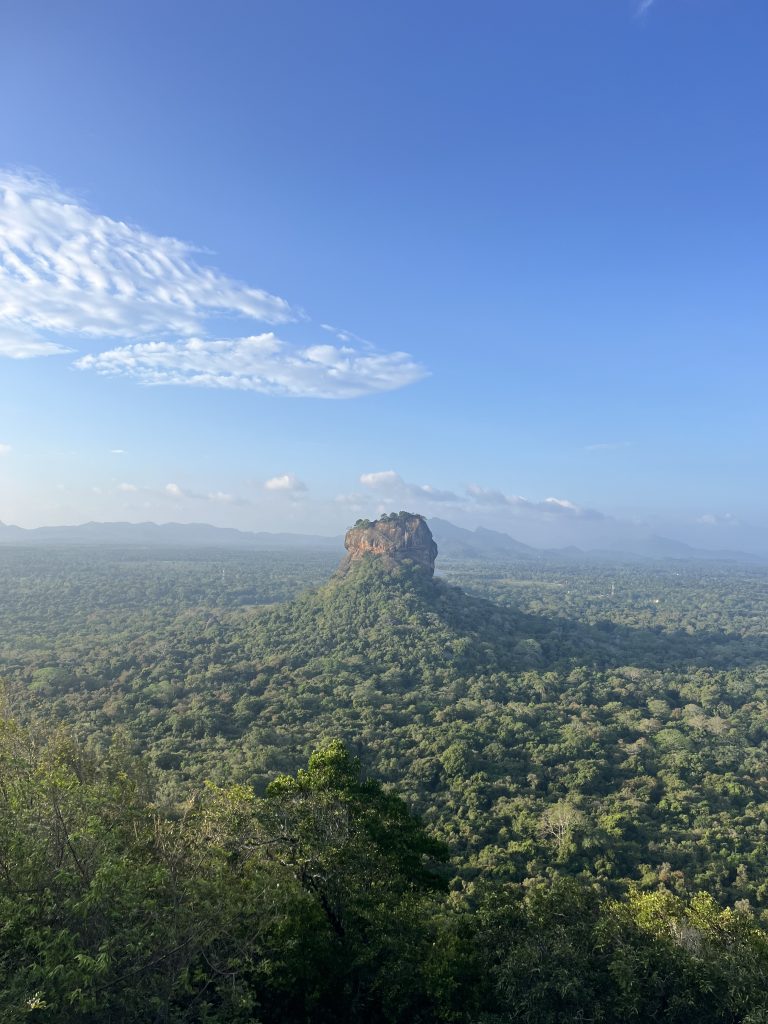
This was my first trip in (almost) years just for the sake of having fun relax a bit. Until now, most of my trips had been done for purely journalistic reasons. Sri Lanka was not really high on my bucket list, but my partner convinced me to go to the “teardrop of India”.
My first distaste came upon arrival. Just as I landed in Colombo, I learned that Spanish passport holders did not need a visa anymore to visit Sri Lanka. This came to me as a surprise as weeks before I had thoroughly checked different websites which stated that I needed to buy a 55$ visa to enter the country. Perhaps I should blame the webpage of the Spanish Ministry of Foreign Affairs for not having updated the webpage, but what was more shocking for me is the fact that the official Sri Lankan immigration webpage had not been updated, charging me for the visa even if there was no need for it. They just took my money without warning me there was other way possible — just a little glimpse to what I would encounter along the rest of my trip.
No one at immigration said a word about the 55$ that I had been scammed in the internet site. They couldn’t care less. You are just a tourist, another European traveller that has infinite money and doesn’t care about losing 55$ in a stupid error. Just like that, the rest of the trip I encountered similar scams and stupid charges for things that do not even make sense. I always say that there’s specific places where scams and literal assaults to your wallet happen more often than in others (namely Morocco, Egypt…etc.). Sri Lanka turned out to be (surprisingly) one more country in that list, with the addition that the scams were so obvious and stupid. This just infuriated me twice as much as other normal scams — do they really think I am that stupid?
Everything in Sri Lanka that has a minimum interest for tourists is overexploited and pillaged, which draws all the possible magic it could have. Hordes of tourists fill the main spots (I am part of the problem) while monopolies of scammers sack them in any possible way.
In Sigiriya I was faced with the first situation that made me start thinking about writing this article. Once we arrived to a town not too far from the site, we tried ordering a “Pick Me”, which is some sort of Sri Lankan Uber. The driver accepted and agreed to take me for the fare reflected in the app. Then, he called me to double-check my location. When he learned I was not local, he said that I either paid him double or he wouldn’t take me. A local later on confirmed to me that tuk-tuk drivers in the country do that quite often to tourists as most of them end up accepting the scam. The same happened to me in Kandy, which made me lose my temper. I can’t imagine many places I’ve visit where the “pacta sunt servanda” does not apply.
We ended up not visiting Sigiriya. Not because of all the scams around it but because of the mind-blowing price to hike up the ancient mountain: 40$. And the worst part is that the reason why they’ve put this price is because tourists actually agree to pay that absolute scam to go up the hill. This just sets a dangerous precedent (just like it happens with the tuk-tuks) for them to have all the liberty they want to put the prices they want.
In Sigiriya we also went to a small “exposition farm” where they show the different spices and natural cosmetic products that are made in the country. After a 20min free tour of the farm we were lead to the shop of the farm. By that time we already knew that the “tour” wasn’t free as they promised and they were just expecting us to buy them something in return. Fine, we already had our eye in some products we wanted to buy. But after spending almost more than 50€ in some cosmetics and spices, the guy that had done the tour for us and seemed so sweet started insisting aggressively, shouting and spitting out senseless offers to try to take even the last penny from us. When we kindly said our definitive “no”, he looked at us as if we were of no value and his charm instantly disappeared.
Spoiler alert: we practically did not have a single genuine interaction with any local. Every time we found someone interested in us, wishing to have a small chat, that person had almost always “hidden interests”. In Sri Lanka, tourists are no more than walking dollars.
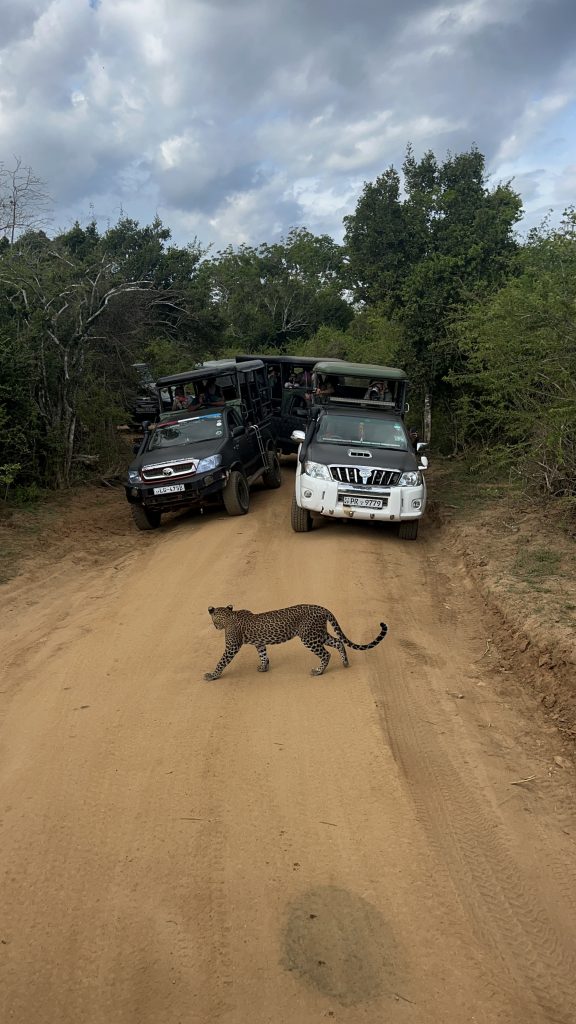
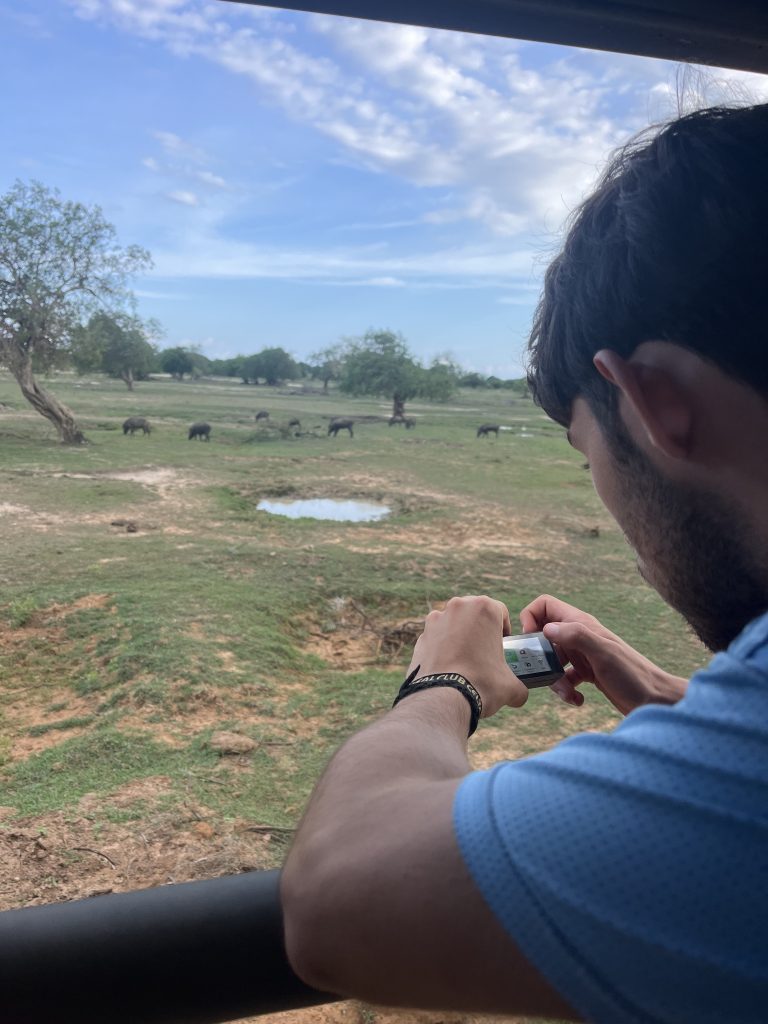
The highlight of our trip was meant to be a safari across Yala National Park, where we were promised to see all sorts of animals. Alright, I get it, the safari is cheap and we should have had too many expectations. We did end up seeing all sorts of animals: leopards, elephants, peacocks…etc. Nonetheless, we found the experience to be rather artificial. The 4×4 drivers communicated between themselves in order to spot the main animals. This caused literal traffic jams in the little road trails. Endless queues of 4x4s occupied the main roads just to have a chance to see a quarter of a leopard. Some drivers “illegally” and scrumptiously overtook other drivers in order to allow their tourists to see the animals without caring about the rest. This led to fights between some drivers that rather “stained” our experience.
After the safari, we had paid a driver to take us to Hiriketiya beach, which is not too far from Yala. The price that we had paid for the transportation included a range as far as Galle and beyond, almost 2h from Hiriketiya. For that reason, we thought we were doing a favor to our private driver by just making him drive until Hiriketiya. The guy not only made us pay the ticket of the highway toll but once we arrived to our destination (after having saved him several hours and money) he extended his hand and said: “money, money!”. He wanted to force us to tip him.
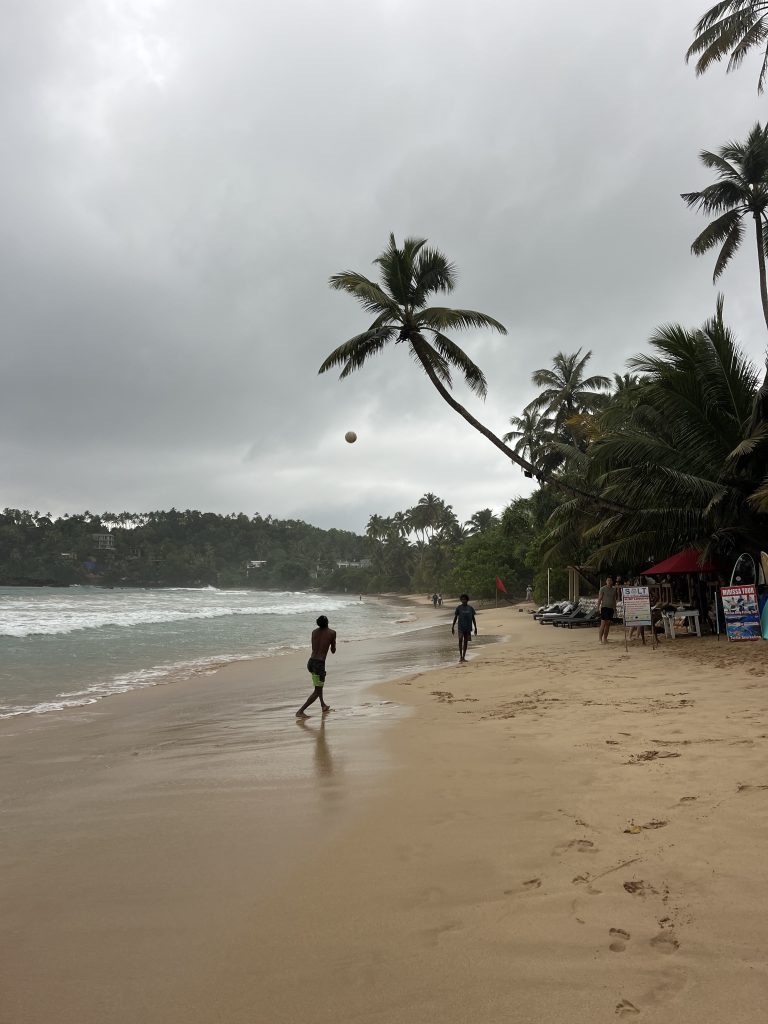
It was just very sad and frustrating not being able to trust any local. Once we finally made it to the trendy beach area of the country where so many pictures and “Tik Toks” have been uploaded to social media, we were faced again with disappointment. The beaches were not mildly dirty, they were incredibly filthy. The pictures online clearly do not reflect the poor state of the coast of the country. Not only was there mounts of trash on the sand, but there were also pollution stains in the middle of the sea (where we surfed) which produced some sort of dirty foam that made me want to throw up.
The beaches, although they were not as crowded as Bali’s, they were quite packed with surfers. Crushes and accidents between surfers were something common.
My turning point came the day we decided to surf. My partner has long been scared of the sea, and especially all sorts of waves. Still, she insisted in trying a surf lesson. After we agreed on the price for the lesson (15$ for 1h30min), we started our class. It is worth saying that I also had to pay for being just next to her and help the surf teacher. The prof spent a ridiculous 10min helping her warming up and preparing her to get into the water. After that we went straight into the water. As we had expected, she panicked when the first waves came and asked to leave the about 8mins in.
The teacher tried convincing her to come back but she had already made up her mind. While my partner was trying to relax, I returned my surfboard and offered him (just to have a bit of courtesy) to pay him the full amount of both courses. I was expecting him to reject it immediately and not charge me anything for it, nonetheless, he quickly took my money without saying anything else. His colleague later offered me a 1h free board rental which I, of course, never used as a way of disapproving the coach’s heinous gesture.
After this incident I knew I was done with this country. Never in my trips (with the notable exception of Morocco) had I had so many bad experiences with the local population. Galle was even crazier than all of the other places we visited combined when it comes to scams. The amount of annoying people trying to offer “free help” at the train station and in the old city while at the same trying to scam us in all sorts of ways was incredibly tragic. At one point I started taking it with a bit of humor and started speaking in my mother tongue, Galician, just to confuse them.
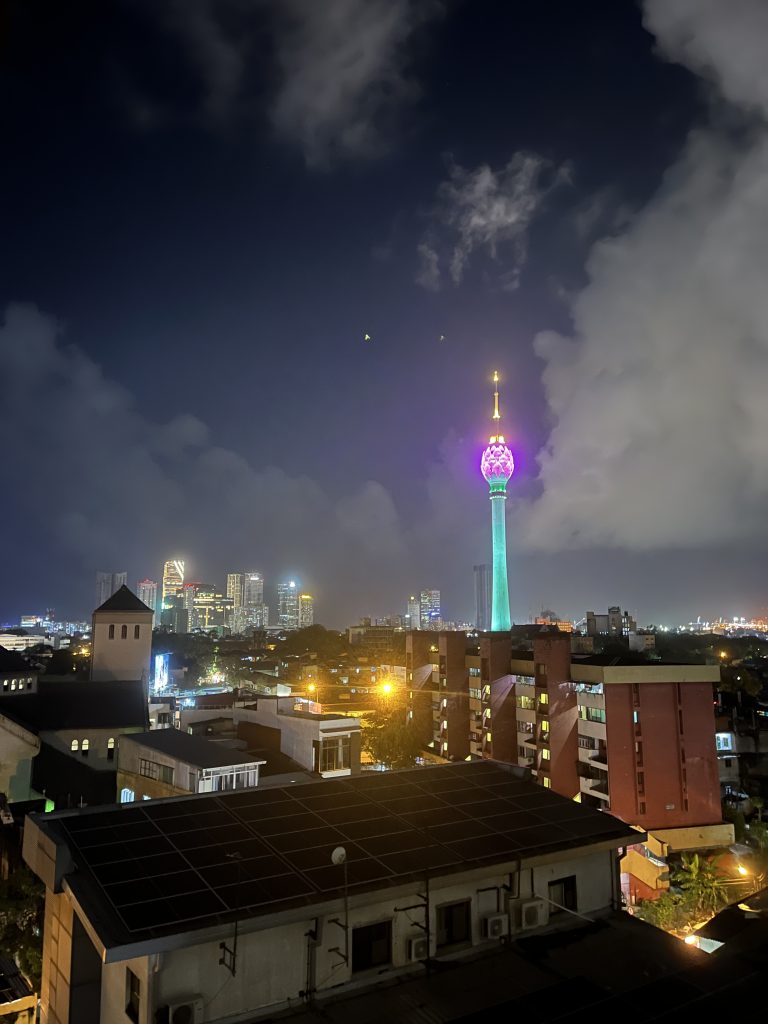
Interestingly enough, we never encountered any of these problems in Colombo, the capital. Despite not having too much to see, Colombo happened to be the only “genuine” place we encountered in our 10-day trip. People did not try to scam us in any possible way, they were keen to help without having anything in return and we managed to experience some of the “real” Sri Lanka.
There appears to be a clear link between tourism and the rise of these opportunistic individuals filled with greed and willing to treat you like an asset and not like a human being. The fact that this only happened in the main touristic sites and not in non-touristic spots like Colombo proves the theory, Me, and all of the tourists that came before me, are part of this problem. But I do not believe that we are the only ones to blame for this. There way more touristy countries out there that are far from having the same problems as Sri Lanka has.
I won’t be coming back to Sri Lanka in the near future, but if you are still planning on visiting the island, I hope this article has served as a good heads up of what to expect.
Take care!